Friday, November 21, 2025

Bulletin Article on Holtec

Smith, Matt, How Holtec International became an expanding (and controversial) nuclear power, Bulletin of the Atomic Scientists, Nov 20, 2025. https://www.eenews.net/articles/did-trump-just-pick-a-nuclear-national-champion/(Photos excluded)

Matt Smith was the reporter I worked with a year ago on this. I thought he had abandoned the effort, but apparently not. 

Michel

Michel Lee, Esq.
Chairman
Council on Intelligent Energy & Conservation Policy (CIECP)

High cost, risk and demand uncertainty chilling new reactor build in US

E&E News reporting that not all US electric utilities are gung-ho to "Make Atoms Great Again," some even showing signs of cold feet.

Thursday, November 20, 2025

Disasters in a post-truth world

https://connect.thebulletin.org/index.php?action=social&chash=5c572eca050594c7bc3c36e7e8ab9550.669&s=81a6ad45577a5ef1dac9123f1e362b84


Bloomberg / US Govt to "buy and own" domestic nuclear power plants

https://www.msn.com/en-us/money/other/us-to-own-nuclear-reactors-stemming-from-japan-s-550-billion-pledge/ar-AA1QKTdx?ocid=finance-verthp-feeds

US to Own Nuclear Reactors Stemming From Japan’s $550 Billion Pledge

Story by Ari Natter and Will Wade • 3 min read

A cooling tower at a nuclear station in Scriba, New York.© Bloomberg

(Bloomberg) -- The US government plans to buy and own as many as 10 new, large nuclear reactors that could be paid for using Japan’s $550 billion funding pledge, part of a push to meet surging demand for electricity.

The new details of the unusual arrangement were outlined Wednesday by Carl Coe, the Energy Department’s chief of staff, about the non-binding commitment made by Japan in October to fund $550 billion in US projects, including as much as $80 billion for the construction of new reactors made by Westinghouse Electric Co.

“The role of having the government involved in private markets is sacrosanct — you just don’t do it,” Coe said at an energy conference hosted by the Tennessee Advanced Energy Business Council. “But this is a national emergency.”

The Trump administration has sounded alarms bells about a shortage of electricity needed for energy-hungry data centers that power artificial intelligence and for a potential resurgence of domestic manufacturing.. On his first day in office, President Donald Trump declared an energy emergency, unlocking new domestic powers to fast-track pipelines, expand power grids and save struggling coal plants. 

It has been more than a decade since the US last broke ground on a large-scale nuclear power plant that came online. Most of America’s energy industry wrote off for dead the notoriously expensive projects after Southern Co., the last utility to build a new plant, went $16 billion over budget and seven years behind schedule building its Vogtle project.
Related video: America's $35 Billion New Nuclear Power Plant (MegaBuilds)

MegaBuilds
America's $35 Billion New Nuclear Power Plant

Still, the AI boom has created new life for the big plants. Earlier this year, Xcel Chief Executive Officer Bob Frenzel raised the idea that the projects could come back in vogue.

It is still unclear whether the funding commitments made by Japan, announced last month as part of a trade deal framework with the US, will come to fruition. In all, Japan has agreed to invest some $332 billion for energy projects in the United States, according to the White House. That pledge, in addition to Westinghouse’s new AP1000 reactors, include a new breed of smaller nuclear reactors, as well new power plants, electric transmission projects and pipelines. 

The Trump administration’s energy ambitions include orders aimed at accelerating the construction of nuclear power plants and government funds to support the restart of shuttered nuclear plants. An executive order aims to get 10 large, conventional reactors under construction by 2030, a target the industry has said will be challenging, but possible.

Shares of Oklo Inc., a US developer of small modular reactors, rose on Wednesday following Coe’s statement. Its stock was up 6% at 1:57 pm in New York. Shares in Canadian uranium miner Cameco Corp. rose as much as 5.7% and were up 3.3% at 1:57 pm in New York. 

The Energy Department didn’t immediately respond to a request for more details. Coe, in his remarks at the conference, said lots of details remained to be decided, but expressed confidence the nuclear reactors would come through. 

“We’re trying to decide where to put them,” Coe said.

Bellwether of a "ratepayer protection" movement?

https://www.wpr.org/news/democratic-wisconsin-lawmakers-propose-legislation-capping-utility-bills?utm_source=Sailthru&utm_medium=email&utm_campaign=Issue:%202025-11-18%20Utility%20Dive%20Newsletter%20%5Bissue:78979%5D&utm_term=Utility%20Dive

Democratic Wisconsin lawmakers propose legislation capping utility bills

Bill would essentially cap residential utility bills at 2 percent of household income

By   |  

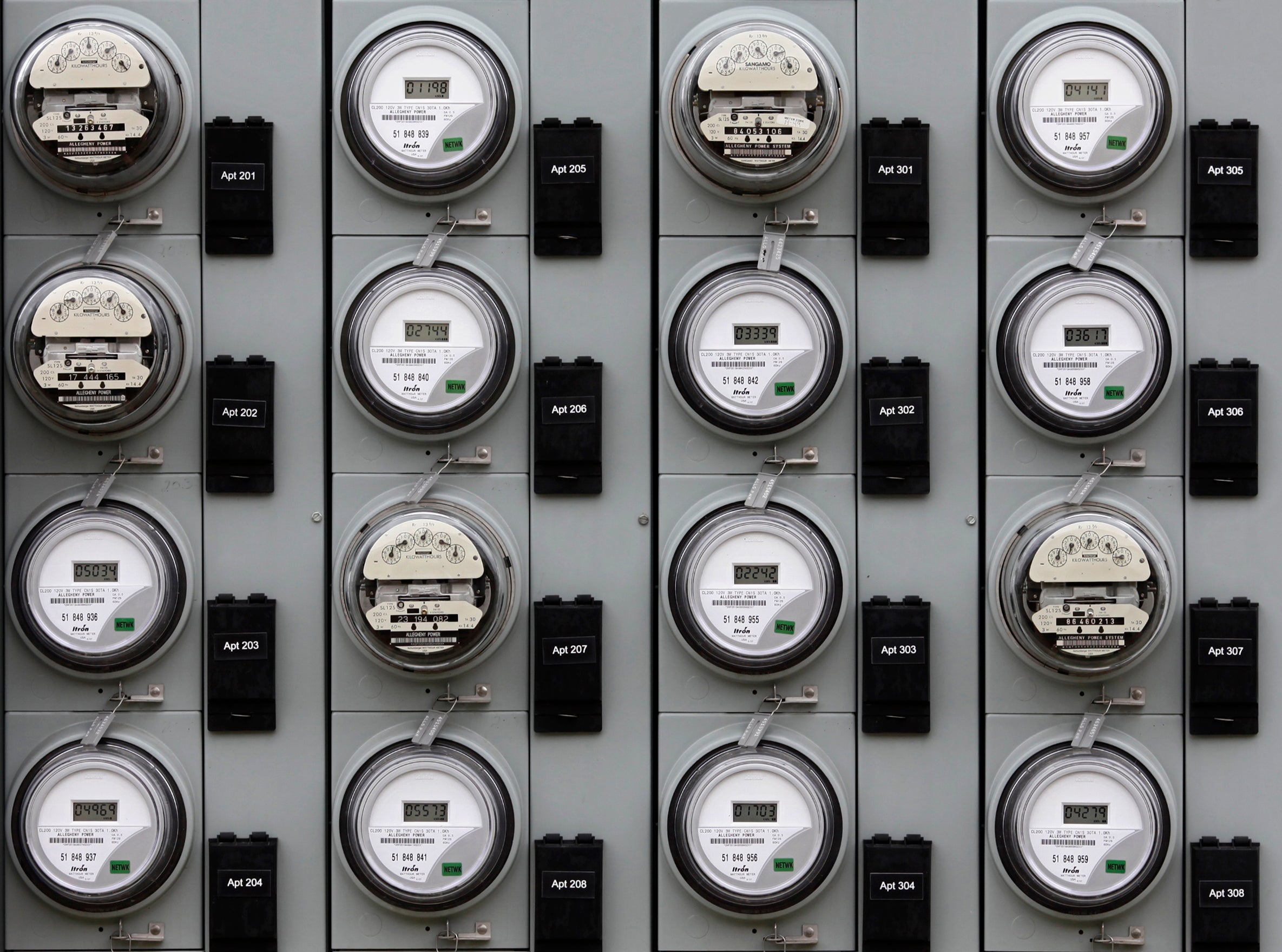
A grid of electric utility meters and labeled black circuit boxes mounted on a gray panel, each meter displaying numerical readings.
In this May 6, 2009 photo, watt-hour meters track electricity used by residents of an apartment building in St. Marys, Pa J. Scott Applewhite/AP Photo

Wausau resident Jill Sexton and her husband are both in their 60s. Sexton says she’s on disability and her husband is on Social Security. 

Sexton said she had to take a part-time job to cover rising utility costs, but it’s still tough to make ends meet.

“Each month, we choose between paying the electric bill and heat bill or filling our prescriptions,” she said at a recent news conference. “Some months, I don’t buy the medication. Some months, we stretch food until the very last day.”

Democratic state lawmakers are proposing a bill that they say would address the issue.

At a Nov. 11 press conference, state Reps. Darrin Madison of Milwaukee, Francesca Hong of Madison and Ryan Spaude of Ashwaubenon announced legislation that would essentially cap residential energy bills in Wisconsin at 2 percent of household income.

The bill would require the Public Service Commission of Wisconsin to create a percentage of income payment program that would provide relief to energy burdened or severely energy burdened households.

The legislation defines energy burdened households as those spending between 2 and 4 percent of their household income on electricity and gas bills, and severely energy burdened households as those spending 4 percent or more.

Spaude said the bill is “all about affordability.”

“Folks in my district and around the state are on a knife’s edge,” he said. “Many of them are just barely getting by. This bill is going to do something. It’s going to keep more money in their pockets.”

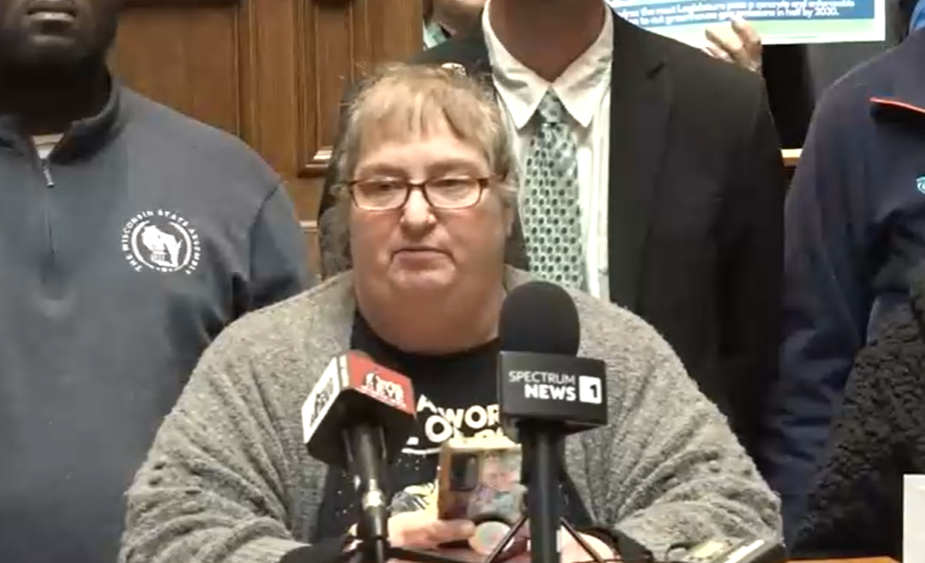
A woman speaks at a podium with multiple microphones during a press event, with several people standing behind her in a wood-paneled room.
Jill Sexton of Wausau speaks at a news conference about legislation that would essentially cap utility bills. Screenshot courtesy of WisEye video

The Wisconsin Utilities Association declined to comment on the proposal.

Tom Content, executive director of the Citizens Utility Board of Wisconsin, said his organization hasn’t taken a position on the bill yet but said he appreciates that it shines a light on rising energy costs.

“At this time of the session, there are a lot of bills that are introduced for messaging rather than for enactment,” he said.

Democrats nationally are trying to make affordability and cost of living issues a central campaign issue. Democratic candidates who won elections this month in New York, New Jersey and Virginia all made affordability a core component of their messaging.

The Democratic bill would need bipartisan support to reach Gov. Tony Evers’ desk.

“Given that the Republicans control the state Legislature by a good margin, and that this is a Democratic bill, I would say it strikes me as unlikely to become law unless there are some Republican co-sponsors,” said Michael Kraft, an emeritus professor of political science and public affairs at the University of Wisconsin-Green Bay.

Electricity prices expected to continue rising through 2026

Nationally, retail electricity prices have outpaced inflation since 2022, and are expected to continue rising through 2026, according to a May 2025 analysis from the U.S. Energy Information Administration.

“Right now, we’re in a period where electricity prices are actually the ones, I think, driving inflation,” Content said. “For all the attention that egg prices got last year, the price of power is what is really taking hold this year.”

Increases in average monthly residential electric bills in Wisconsin stayed below inflation from 2014 to 2024, the most recent year with available data, according to federal data. During that period, average monthly bills rose from $94.88 to $110.87. The U.S. Bureau of Labor Statistics inflation calculator shows $94.88 in December 2014 money had the same buying power as $127.53 in December 2024.

During the same period, the average price per kilowatt-hour — the cost of one kilowatt of electricity used for one hour — in Wisconsin has risen by nearly 26 percent, federal data shows. The average price per kilowatt-hour rose from 13.67 cents per kilowatt-hour in 2014 to about 17.18 cents per kilowatt-hour in 2024.

Electric bills can also vary by utility. For example, We Energies’ average electric bills in 2014 and 2024 were slightly above the statewide average, while Wisconsin Public Service bills were slightly lower than average, according to data from the Citizens Utility Board of Wisconsin.

We Energies’ average monthly residential electric bill was $99.65 in 2014 and $127.29 in 2024, while Wisconsin Public Service’s average residential electric bill was $83.94 in 2014 and $105.13 in 2024, according to the Citizens Utility Board of Wisconsin.

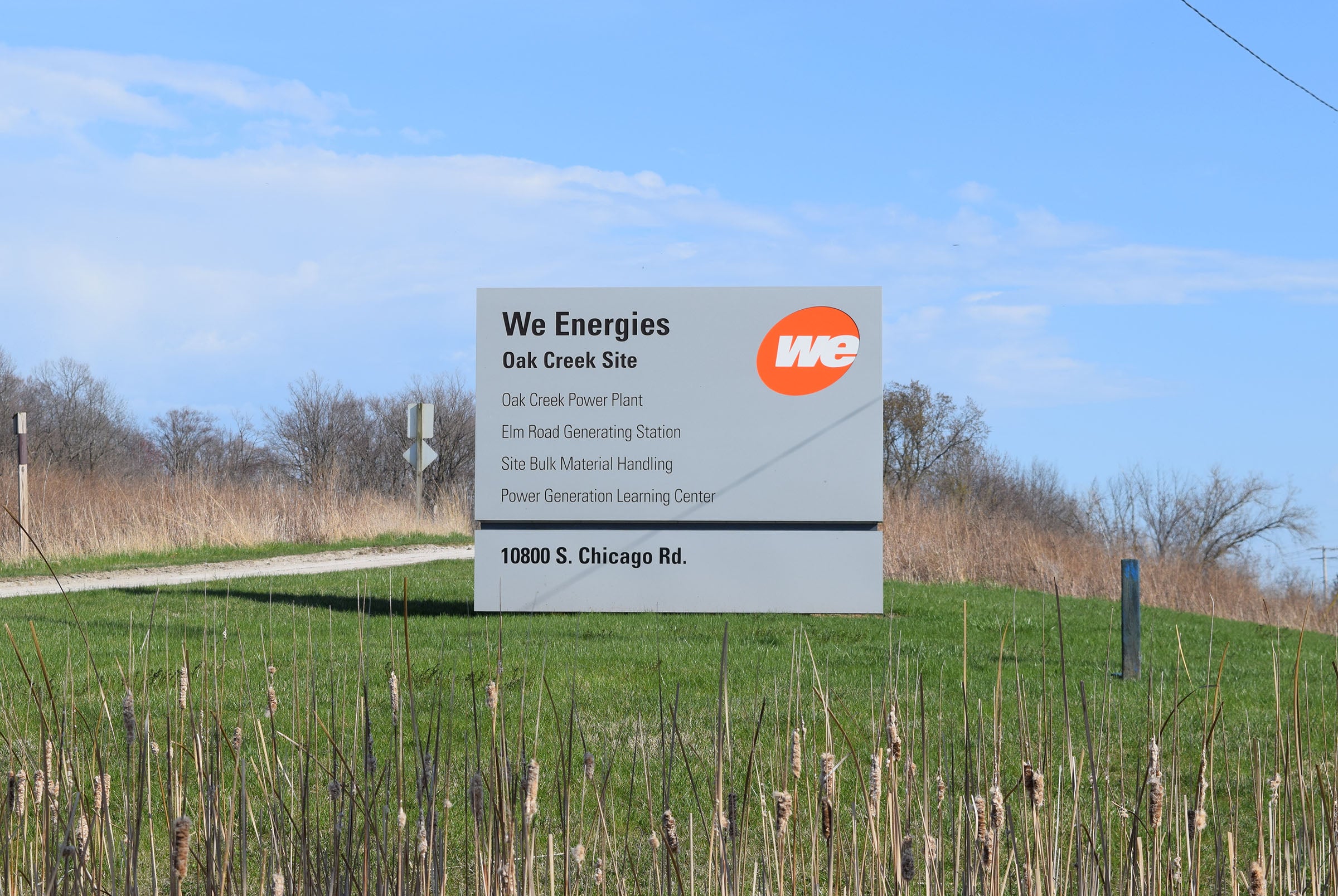
A sign on a grassy area reads We Energies Oak Creek Site with a list of facilities and the address 10800 S. Chicago Rd. Blue sky and trees are in the background.
A sign for We Energies’ Oak Creek site, home to its Oak Creek Power Plant and Elm Road Generating station is seen from the road. Evan Casey/WPR

Brendan Conway, a spokesperson for the parent company of We Energies and WPS, said in an email that the company’s typical customer bills are below the national average and in line with other utilities across the Midwest. 

“Our rates since 2020 have increased below the rate of inflation and we work every day to keep bills as low as possible,” Conway said. “Just this fall we returned nearly $70 million to customers through bills credits for fuel cost adjustments.”

Maria Beltran, a We Energies customer who lives in Milwaukee, said at the press conference that she struggled with energy bills when she was raising her children. She said her family often had to endure months without electricity and heat.

“The help that exists is slow, confusing and hard to access when you are already juggling with rent and shut off notices,” she said. “There is so much red tape (and) so many barriers that keep people in poverty oppressed. That is not right.”

Tuesday, November 18, 2025

Cost-conscious utilities resist Trump’s push for nuclear revival - E&E News by POLITICO

https://www.eenews.net/articles/cost-conscious-utilities-resist-trumps-push-for-nuclear-revival/

Cost-conscious utilities resist Trump’s push for nuclear revival

By Brian DabbsFrancisco "A.J." Camacho | 11/18/2025 06:52 AM EST

The administration has yet to convince major utilities to commit to building large reactors again.

The Trump administration wants to churn dirt on a bevy of new nuclear power plants.

Electric utilities that power America have different plans.

Despite forecasts for spiking electricity use and pledges from the Department of Energy to bolster nuclear power, utilities aren’t inking contracts to build new plants with the large-scale, light-water reactors that have fueled American homes and businesses for decades.

“I wouldn’t build a nuclear plant,” Exelon CEO Calvin Butler told CNBC last week. “What I could do is lean in on combined-cycle gas turbines. What I could do is build community solar. What I could do is own battery storage.”

Duke Energy, a major utility in the Southeast, is now hedging after laying out loose plans in October to produce more than a gigawatt of new nuclear power by 2037.

“We still need to figure out what we’re going to do with cost overrun protection and how we’re going to protect our investors and our customers from overruns,” Duke CEO Harry Sideris said on an earnings call earlier this month. “Nothing going forward until we have those other items resolved.”

That hesitation is throttling Trump administration plans to reassert U.S. nuclear leadership globally — and to ensure there is enough power in the U.S. to win the artificial intelligence race with China. Experts say new builds are important drivers of industry advancement that will cut costs and boost innovation. They’re also needed to keep powering America with nuclear energy, as many of the 94 reactors in the U.S. near retirement.

“There’s not a single company out there talking about a brand new light water reactor, and that’s where the administration gets frustrated,” an energy lobbyist, who has close ties to administration and was granted anonymity to speak freely, told POLITICO’s E&E News. “The administration is a little tone deaf in understanding the trepidations from a Wall Street standpoint.”

The utility sector is grappling with a laundry list of nuclear concerns. It’s worried about high costs, hits to balance sheets and the availability of enriched uranium in the U.S. following a cut-off from Russian imports in 2028. Utility CEOs are also skeptical that the capital-intensive power will be needed if demand forecasts contract.

Nuclear construction is one of many areas of discord between the White House and utility sector.

Meanwhile, nuclear power is taking off elsewhere around the globe. China is building dozens of new large-scale reactors and dramatically cutting costs to build plants, according to recent academic research out of Johns Hopkins University, Harvard University and other institutions.

Federal support

Late last month, the Trump administration and reactor developer Westinghouse announced a “strategic partnership” to build large nuclear plants. The agreement gives the government the option to invest $80 billion into building new U.S. Westinghouse reactors in exchange for profit sharing,

While critical details remain unclear, like which utilities will purchase the power, the investment pledge is the culmination of months of rhetorical boosts for nuclear power.

“I’ve heard about the nuclear renaissance for 20 years,” Energy Secretary Chris Wright told the Foundation for American Innovation’s gala last week, according to POLITICO. “We are all in to make it happen, and with all of your help, we will make it happen.”

Meanwhile, DOE is looking for ways to help finance domestic uranium enrichment. And the administration has called for reform and expedited approvals from the Nuclear Regulatory Commission, which is tasked with ensuring nuclear safety.

In a statement, DOE spokesperson Ben Dietderich said the administration has “taken historic action to accelerate next-generation nuclear deployment,” pointing in part to a DOE loan to restart the Palisades nuclear plant in Michigan. That financing was initially approved by the Biden administration.

Some other new nuclear activity is afoot in the U.S. utility world. In September, the Tennessee Valley Authority, a federally owned utility, signed an agreement with ENTRA1 Energy, a developer of small modular reactors. Meanwhile, other companies are signaling interest in restarting shuttered plants and completing work on partially-constructed ones. Last month, Santee Cooper approved a nonbinding letter of intent to finish construction at the VC Summer nuclear station in South Carolina.

High cost, high risk

The sector remains traumatized and skittish after sky-high cost overruns tied to construction of the Vogtle nuclear expansion in Georgia, completed in 2024 at roughly double the anticipated price tag. In 2017, South Carolina’s Santee Cooper and a project partner also abandoned two Westinghouse reactors at VC Summer after sinking $9 billion into the project.

“They don’t want to get caught the way that the Vogtle utilities and developers were,” said Advait Arun, senior associate for capital markets at the Center for Public Enterprise. “They’re weighing the odds.”

The Vogtle cost overruns sent Westinghouse into bankruptcy and created a public relations nightmare for Southern Co., the parent company of Georgia Power, which purchases power from Vogtle.

Dale Klein, a former NRC chair, said that utilities remain cautious.

“Utilities, by nature, are going to be conservative, and they’ll do what’s cheap, reliable, and quick,” Klein said. “There are a lot of memoranda of understanding that are being signed today, and MOUs are only worth the paper they’re written on. It just means they’re going to agree to work and think about things.”

He said the decision to contract a new nuclear plant could deliver a blow to the stock price of the company.

“If a publicly traded utility was to announce that they’re going to build a new large, conventional nuclear reactor, it’s very likely that their stock price would drop because Wall Street would be worried about the risk,” Klein said.

A nuclear fiasco akin to Vogtle could upend the balance sheet for a small or moderate-sized utility, experts said.

Overruns didn’t upend Southern Co.’s balance sheet because the utility was able to pass upfront costs onto ratepayers. Now, other states are aiming to get laws on the books, known as construction work-in-progress rules, that allow their utilities to do the same. A bill in North Carolina attempts to do that. A recently passed bill in Missouri allows utilities to pass on costs, but only for new gas projects.

“[Utilities] have to consider what’s right for the ratepayers, and that’s going to be the first big question,” said Rowen Price, a policy adviser at the center-left think tank Third Way.

But with electricity prices rising nationwide, the public utility commissioners that regulate the utility sector could thwart plans for rate hikes.

“If a utility wants to build nuclear, they have to be very careful in how they approach PUCs,” Arun said. “In light of broader concerns about affordability, we shouldn’t assume approval of rate hikes as granted, at least not to the degree that they could finance nuclear.”

Critics of nuclear power are relishing the inaction among utilities.

“We’ve seen these so-called nuclear renaissance efforts declared in the past,” said Kevin Kamps, radioactive waste watchdog at the nonprofit Beyond Nuclear. “It’s such a horrendous recent experience, no wonder the utilities aren’t gung-ho to jump in if any of their own skin is in the game.”

Demand spike uncertainty

The United States faces an electricity demand surge unseen in a generation. But some experts think the forecasts may be overblown. Data center developers are logging potential projects in multiple locations across the country, and that’s added uncertainty to the infrastructure build-out. Moreover, data centers could become more efficient and the pace of the tech industry could slow.

Experts compare the current demand scenario with the dot-com era, when dramatic electricity demand spikes were projected but never materialized.

“If there is a sharp contraction in demand, the projects that will go first are the largest capital investments with the least flexibility value in the future,” Arun said. “You’re going to see a lot more investment in cheaper gas, solar and storage and batteries, and wind — these kinds of technologies.”

Moreover, the highest confidence for skyrocketing power demand forecasts is in the next few years.

“When you look at that demand that you have to meet right now, that means natural gas is about your only choice for 24/7 operation,” Klein said. “They’re building these data centers now. They need electricity now. Nuclear takes longer.”

Still, Klein was hopeful that utilities will invest in nuclear projects today to meet long-term forecasts, which still predict continued growth. That could help provide investment confidence.

“If the data centers come in with money up front and say, ‘I will guarantee I’m going to buy this electricity for the long term, and I’m willing to be risk-sharing,’ then I think you’ll see some plants being built,” Klein continued.

Edison Electric Institute, the main lobbying group for for-profit utilities, says it supports nuclear.

“Nuclear energy is essential to delivering as many electrons to the grid and providing more reliable energy to the American people as affordably as possible,” EEI CEO Drew Maloney said in a statement. “We welcome the Trump administration’s focus on revitalizing this sector and look forward to working together to power America’s future.”

But to boost nuclear energy, utilities will need to move beyond rhetoric. Experts say the Trump administration’s $80 billion pledge is merely pomp until utilities get involved.

“It’s all kind of holographic until someone actually buys a reactor,” said the energy lobbyist granted anonymity to speak freely. “Who’s going to buy the reactor? Until your acme utility actually signs a contract, it’s irrelevant.”


Monday, November 17, 2025

Radioactive shrimp

https://www.reuters.com/business/healthcare-pharmaceuticals/indonesia-tests-footwear-returned-united-states-caesium-137-contamination-fears-2025-11-12/

Indonesia tests footwear returned from United States on Caesium-137 contamination fears

By Reuters

JAKARTA, Nov 12 (Reuters) - Indonesia is conducting further tests on footwear products returned from the United States following claims they had been contaminated with radioactive Caesium-137, a special government task force responsible for handling the issue said on Wednesday.

"We received information that contamination was found in footwear products exported to the United States," said Bara Hasibuan, spokesman for the task force.

"After the investigation, we found two containers suspected to have Cs-137, and so they were then returned to Indonesia," he said.

He said the footwear products came from a manufacturing company with the initials "NM", which was located in Cikande but outside the Modern Cikande Industrial Estate, an area some 68 km (42 miles) from the capital Jakarta that is considered to be the epicentre of the radioactive contamination.

Hasibuan said the first container of footwear arrived in Indonesia a month ago and has not been inspected.

The second container was inspected by the nuclear agency and there were no traces of Caesium-137 on its surface, making it safe to store at the port.

Hasibuan said tests were now underway on the footwear products inside the container, adding that the contamination was airborne and probably originated in a scrap metal factory inside the industrial estate.

The contamination case was first detected in a batch of shrimp shipped to the United States in August by a local company. The United States has imposed new certification requirements for imports of shrimp and spices from Indonesia.

The task force also said it had finished the decontamination process at 22 facilities at the industrial estate where traces of Caesium-137 had been found.

Caesium-137 enters the environment as a result of past nuclear tests or accidents like Chernobyl and Fukushima, but it is also used in some industrial applications like oil well logging.

Indonesia has no nuclear weapons or nuclear power plants.