Thursday, November 20, 2025

Bloomberg / US Govt to "buy and own" domestic nuclear power plants

https://www.msn.com/en-us/money/other/us-to-own-nuclear-reactors-stemming-from-japan-s-550-billion-pledge/ar-AA1QKTdx?ocid=finance-verthp-feeds

US to Own Nuclear Reactors Stemming From Japan’s $550 Billion Pledge

Story by Ari Natter and Will Wade • 3 min read

A cooling tower at a nuclear station in Scriba, New York.© Bloomberg

(Bloomberg) -- The US government plans to buy and own as many as 10 new, large nuclear reactors that could be paid for using Japan’s $550 billion funding pledge, part of a push to meet surging demand for electricity.

The new details of the unusual arrangement were outlined Wednesday by Carl Coe, the Energy Department’s chief of staff, about the non-binding commitment made by Japan in October to fund $550 billion in US projects, including as much as $80 billion for the construction of new reactors made by Westinghouse Electric Co.

“The role of having the government involved in private markets is sacrosanct — you just don’t do it,” Coe said at an energy conference hosted by the Tennessee Advanced Energy Business Council. “But this is a national emergency.”

The Trump administration has sounded alarms bells about a shortage of electricity needed for energy-hungry data centers that power artificial intelligence and for a potential resurgence of domestic manufacturing.. On his first day in office, President Donald Trump declared an energy emergency, unlocking new domestic powers to fast-track pipelines, expand power grids and save struggling coal plants. 

It has been more than a decade since the US last broke ground on a large-scale nuclear power plant that came online. Most of America’s energy industry wrote off for dead the notoriously expensive projects after Southern Co., the last utility to build a new plant, went $16 billion over budget and seven years behind schedule building its Vogtle project.
Related video: America's $35 Billion New Nuclear Power Plant (MegaBuilds)

MegaBuilds
America's $35 Billion New Nuclear Power Plant

Still, the AI boom has created new life for the big plants. Earlier this year, Xcel Chief Executive Officer Bob Frenzel raised the idea that the projects could come back in vogue.

It is still unclear whether the funding commitments made by Japan, announced last month as part of a trade deal framework with the US, will come to fruition. In all, Japan has agreed to invest some $332 billion for energy projects in the United States, according to the White House. That pledge, in addition to Westinghouse’s new AP1000 reactors, include a new breed of smaller nuclear reactors, as well new power plants, electric transmission projects and pipelines. 

The Trump administration’s energy ambitions include orders aimed at accelerating the construction of nuclear power plants and government funds to support the restart of shuttered nuclear plants. An executive order aims to get 10 large, conventional reactors under construction by 2030, a target the industry has said will be challenging, but possible.

Shares of Oklo Inc., a US developer of small modular reactors, rose on Wednesday following Coe’s statement. Its stock was up 6% at 1:57 pm in New York. Shares in Canadian uranium miner Cameco Corp. rose as much as 5.7% and were up 3.3% at 1:57 pm in New York. 

The Energy Department didn’t immediately respond to a request for more details. Coe, in his remarks at the conference, said lots of details remained to be decided, but expressed confidence the nuclear reactors would come through. 

“We’re trying to decide where to put them,” Coe said.

Bellwether of a "ratepayer protection" movement?

https://www.wpr.org/news/democratic-wisconsin-lawmakers-propose-legislation-capping-utility-bills?utm_source=Sailthru&utm_medium=email&utm_campaign=Issue:%202025-11-18%20Utility%20Dive%20Newsletter%20%5Bissue:78979%5D&utm_term=Utility%20Dive

Democratic Wisconsin lawmakers propose legislation capping utility bills

Bill would essentially cap residential utility bills at 2 percent of household income

By   |  

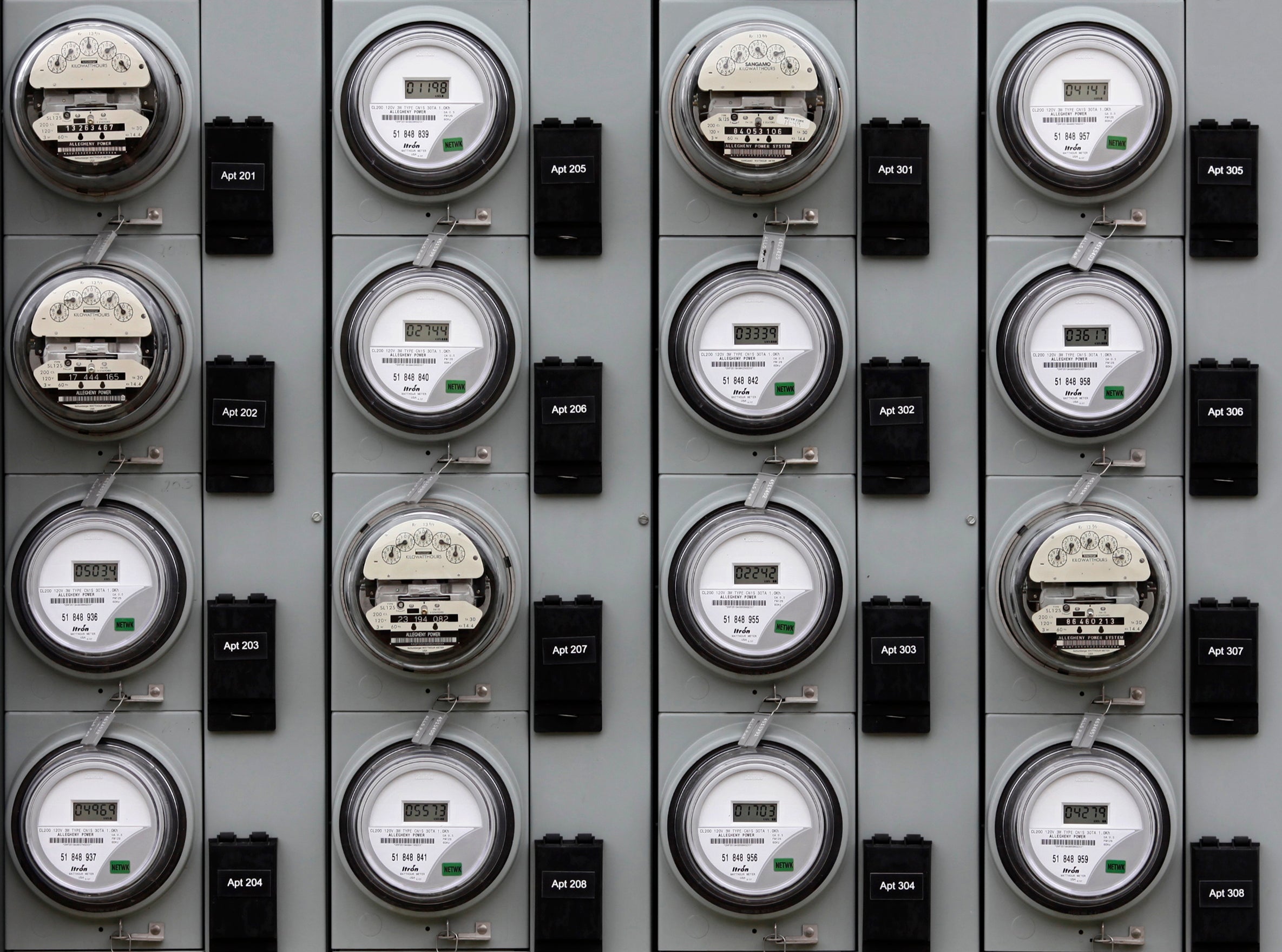
A grid of electric utility meters and labeled black circuit boxes mounted on a gray panel, each meter displaying numerical readings.
In this May 6, 2009 photo, watt-hour meters track electricity used by residents of an apartment building in St. Marys, Pa J. Scott Applewhite/AP Photo

Wausau resident Jill Sexton and her husband are both in their 60s. Sexton says she’s on disability and her husband is on Social Security. 

Sexton said she had to take a part-time job to cover rising utility costs, but it’s still tough to make ends meet.

“Each month, we choose between paying the electric bill and heat bill or filling our prescriptions,” she said at a recent news conference. “Some months, I don’t buy the medication. Some months, we stretch food until the very last day.”

Democratic state lawmakers are proposing a bill that they say would address the issue.

At a Nov. 11 press conference, state Reps. Darrin Madison of Milwaukee, Francesca Hong of Madison and Ryan Spaude of Ashwaubenon announced legislation that would essentially cap residential energy bills in Wisconsin at 2 percent of household income.

The bill would require the Public Service Commission of Wisconsin to create a percentage of income payment program that would provide relief to energy burdened or severely energy burdened households.

The legislation defines energy burdened households as those spending between 2 and 4 percent of their household income on electricity and gas bills, and severely energy burdened households as those spending 4 percent or more.

Spaude said the bill is “all about affordability.”

“Folks in my district and around the state are on a knife’s edge,” he said. “Many of them are just barely getting by. This bill is going to do something. It’s going to keep more money in their pockets.”

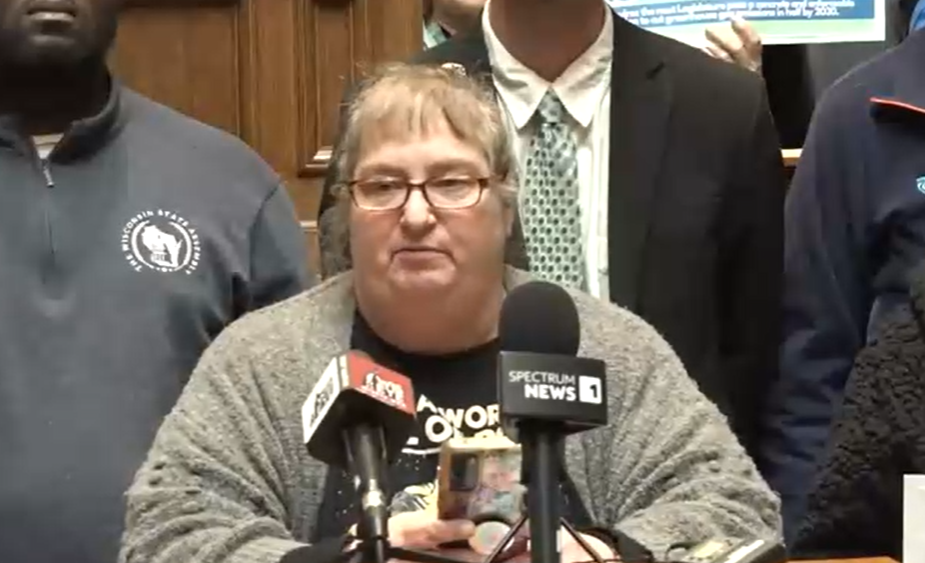
A woman speaks at a podium with multiple microphones during a press event, with several people standing behind her in a wood-paneled room.
Jill Sexton of Wausau speaks at a news conference about legislation that would essentially cap utility bills. Screenshot courtesy of WisEye video

The Wisconsin Utilities Association declined to comment on the proposal.

Tom Content, executive director of the Citizens Utility Board of Wisconsin, said his organization hasn’t taken a position on the bill yet but said he appreciates that it shines a light on rising energy costs.

“At this time of the session, there are a lot of bills that are introduced for messaging rather than for enactment,” he said.

Democrats nationally are trying to make affordability and cost of living issues a central campaign issue. Democratic candidates who won elections this month in New York, New Jersey and Virginia all made affordability a core component of their messaging.

The Democratic bill would need bipartisan support to reach Gov. Tony Evers’ desk.

“Given that the Republicans control the state Legislature by a good margin, and that this is a Democratic bill, I would say it strikes me as unlikely to become law unless there are some Republican co-sponsors,” said Michael Kraft, an emeritus professor of political science and public affairs at the University of Wisconsin-Green Bay.

Electricity prices expected to continue rising through 2026

Nationally, retail electricity prices have outpaced inflation since 2022, and are expected to continue rising through 2026, according to a May 2025 analysis from the U.S. Energy Information Administration.

“Right now, we’re in a period where electricity prices are actually the ones, I think, driving inflation,” Content said. “For all the attention that egg prices got last year, the price of power is what is really taking hold this year.”

Increases in average monthly residential electric bills in Wisconsin stayed below inflation from 2014 to 2024, the most recent year with available data, according to federal data. During that period, average monthly bills rose from $94.88 to $110.87. The U.S. Bureau of Labor Statistics inflation calculator shows $94.88 in December 2014 money had the same buying power as $127.53 in December 2024.

During the same period, the average price per kilowatt-hour — the cost of one kilowatt of electricity used for one hour — in Wisconsin has risen by nearly 26 percent, federal data shows. The average price per kilowatt-hour rose from 13.67 cents per kilowatt-hour in 2014 to about 17.18 cents per kilowatt-hour in 2024.

Electric bills can also vary by utility. For example, We Energies’ average electric bills in 2014 and 2024 were slightly above the statewide average, while Wisconsin Public Service bills were slightly lower than average, according to data from the Citizens Utility Board of Wisconsin.

We Energies’ average monthly residential electric bill was $99.65 in 2014 and $127.29 in 2024, while Wisconsin Public Service’s average residential electric bill was $83.94 in 2014 and $105.13 in 2024, according to the Citizens Utility Board of Wisconsin.

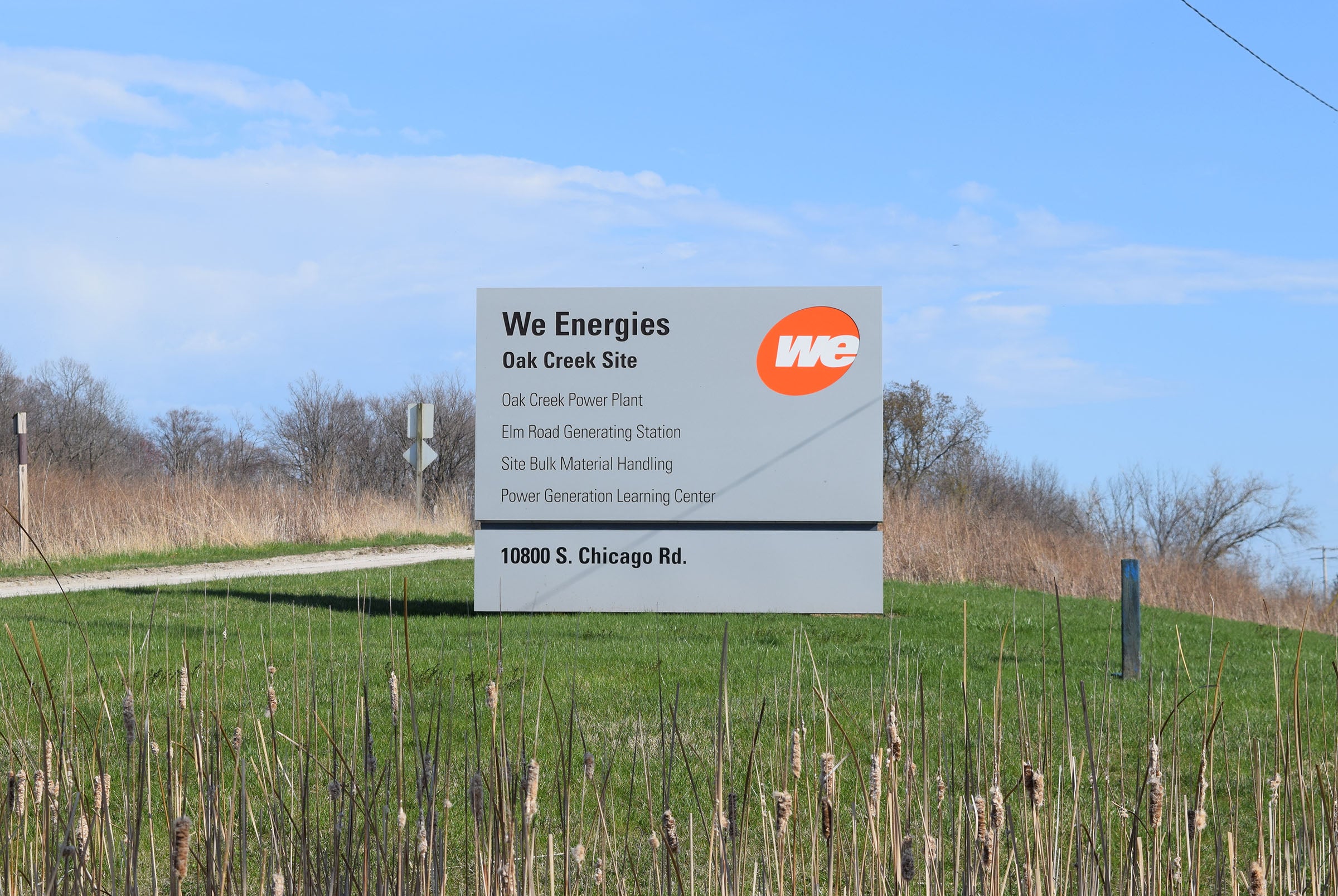
A sign on a grassy area reads We Energies Oak Creek Site with a list of facilities and the address 10800 S. Chicago Rd. Blue sky and trees are in the background.
A sign for We Energies’ Oak Creek site, home to its Oak Creek Power Plant and Elm Road Generating station is seen from the road. Evan Casey/WPR

Brendan Conway, a spokesperson for the parent company of We Energies and WPS, said in an email that the company’s typical customer bills are below the national average and in line with other utilities across the Midwest. 

“Our rates since 2020 have increased below the rate of inflation and we work every day to keep bills as low as possible,” Conway said. “Just this fall we returned nearly $70 million to customers through bills credits for fuel cost adjustments.”

Maria Beltran, a We Energies customer who lives in Milwaukee, said at the press conference that she struggled with energy bills when she was raising her children. She said her family often had to endure months without electricity and heat.

“The help that exists is slow, confusing and hard to access when you are already juggling with rent and shut off notices,” she said. “There is so much red tape (and) so many barriers that keep people in poverty oppressed. That is not right.”

Tuesday, November 18, 2025

Cost-conscious utilities resist Trump’s push for nuclear revival - E&E News by POLITICO

https://www.eenews.net/articles/cost-conscious-utilities-resist-trumps-push-for-nuclear-revival/

Cost-conscious utilities resist Trump’s push for nuclear revival

By Brian Dabbs, Francisco "A.J." Camacho | 11/18/2025 06:52 AM EST

The administration has yet to convince major utilities to commit to building large reactors again.

The Trump administration wants to churn dirt on a bevy of new nuclear power plants.

Electric utilities that power America have different plans.

Despite forecasts for spiking electricity use and pledges from the Department of Energy to bolster nuclear power, utilities aren’t inking contracts to build new plants with the large-scale, light-water reactors that have fueled American homes and businesses for decades.

“I wouldn’t build a nuclear plant,” Exelon CEO Calvin Butler told CNBC last week. “What I could do is lean in on combined-cycle gas turbines. What I could do is build community solar. What I could do is own battery storage.”

Duke Energy, a major utility in the Southeast, is now hedging after laying out loose plans in October to produce more than a gigawatt of new nuclear power by 2037.

“We still need to figure out what we’re going to do with cost overrun protection and how we’re going to protect our investors and our customers from overruns,” Duke CEO Harry Sideris said on an earnings call earlier this month. “Nothing going forward until we have those other items resolved.”

That hesitation is throttling Trump administration plans to reassert U.S. nuclear leadership globally — and to ensure there is enough power in the U.S. to win the artificial intelligence race with China. Experts say new builds are important drivers of industry advancement that will cut costs and boost innovation. They’re also needed to keep powering America with nuclear energy, as many of the 94 reactors in the U.S. near retirement.

“There’s not a single company out there talking about a brand new light water reactor, and that’s where the administration gets frustrated,” an energy lobbyist, who has close ties to administration and was granted anonymity to speak freely, told POLITICO’s E&E News. “The administration is a little tone deaf in understanding the trepidations from a Wall Street standpoint.”

The utility sector is grappling with a laundry list of nuclear concerns. It’s worried about high costs, hits to balance sheets and the availability of enriched uranium in the U.S. following a cut-off from Russian imports in 2028. Utility CEOs are also skeptical that the capital-intensive power will be needed if demand forecasts contract.

Nuclear construction is one of many areas of discord between the White House and utility sector.

Meanwhile, nuclear power is taking off elsewhere around the globe. China is building dozens of new large-scale reactors and dramatically cutting costs to build plants, according to recent academic research out of Johns Hopkins University, Harvard University and other institutions.

Federal support

Late last month, the Trump administration and reactor developer Westinghouse announced a “strategic partnership” to build large nuclear plants. The agreement gives the government the option to invest $80 billion into building new U.S. Westinghouse reactors in exchange for profit sharing,

While critical details remain unclear, like which utilities will purchase the power, the investment pledge is the culmination of months of rhetorical boosts for nuclear power.

“I’ve heard about the nuclear renaissance for 20 years,” Energy Secretary Chris Wright told the Foundation for American Innovation’s gala last week, according to POLITICO. “We are all in to make it happen, and with all of your help, we will make it happen.”

Meanwhile, DOE is looking for ways to help finance domestic uranium enrichment. And the administration has called for reform and expedited approvals from the Nuclear Regulatory Commission, which is tasked with ensuring nuclear safety.

In a statement, DOE spokesperson Ben Dietderich said the administration has “taken historic action to accelerate next-generation nuclear deployment,” pointing in part to a DOE loan to restart the Palisades nuclear plant in Michigan. That financing was initially approved by the Biden administration.

Some other new nuclear activity is afoot in the U.S. utility world. In September, the Tennessee Valley Authority, a federally owned utility, signed an agreement with ENTRA1 Energy, a developer of small modular reactors. Meanwhile, other companies are signaling interest in restarting shuttered plants and completing work on partially-constructed ones. Last month, Santee Cooper approved a nonbinding letter of intent to finish construction at the VC Summer nuclear station in South Carolina.

High cost, high risk

The sector remains traumatized and skittish after sky-high cost overruns tied to construction of the Vogtle nuclear expansion in Georgia, completed in 2024 at roughly double the anticipated price tag. In 2017, South Carolina’s Santee Cooper and a project partner also abandoned two Westinghouse reactors at VC Summer after sinking $9 billion into the project.

“They don’t want to get caught the way that the Vogtle utilities and developers were,” said Advait Arun, senior associate for capital markets at the Center for Public Enterprise. “They’re weighing the odds.”

The Vogtle cost overruns sent Westinghouse into bankruptcy and created a public relations nightmare for Southern Co., the parent company of Georgia Power, which purchases power from Vogtle.

Dale Klein, a former NRC chair, said that utilities remain cautious.

“Utilities, by nature, are going to be conservative, and they’ll do what’s cheap, reliable, and quick,” Klein said. “There are a lot of memoranda of understanding that are being signed today, and MOUs are only worth the paper they’re written on. It just means they’re going to agree to work and think about things.”

He said the decision to contract a new nuclear plant could deliver a blow to the stock price of the company.

“If a publicly traded utility was to announce that they’re going to build a new large, conventional nuclear reactor, it’s very likely that their stock price would drop because Wall Street would be worried about the risk,” Klein said.

A nuclear fiasco akin to Vogtle could upend the balance sheet for a small or moderate-sized utility, experts said.

Overruns didn’t upend Southern Co.’s balance sheet because the utility was able to pass upfront costs onto ratepayers. Now, other states are aiming to get laws on the books, known as construction work-in-progress rules, that allow their utilities to do the same. A bill in North Carolina attempts to do that. A recently passed bill in Missouri allows utilities to pass on costs, but only for new gas projects.

“[Utilities] have to consider what’s right for the ratepayers, and that’s going to be the first big question,” said Rowen Price, a policy adviser at the center-left think tank Third Way.

But with electricity prices rising nationwide, the public utility commissioners that regulate the utility sector could thwart plans for rate hikes.

“If a utility wants to build nuclear, they have to be very careful in how they approach PUCs,” Arun said. “In light of broader concerns about affordability, we shouldn’t assume approval of rate hikes as granted, at least not to the degree that they could finance nuclear.”

Critics of nuclear power are relishing the inaction among utilities.

“We’ve seen these so-called nuclear renaissance efforts declared in the past,” said Kevin Kamps, radioactive waste watchdog at the nonprofit Beyond Nuclear. “It’s such a horrendous recent experience, no wonder the utilities aren’t gung-ho to jump in if any of their own skin is in the game.”

Demand spike uncertainty

The United States faces an electricity demand surge unseen in a generation. But some experts think the forecasts may be overblown. Data center developers are logging potential projects in multiple locations across the country, and that’s added uncertainty to the infrastructure build-out. Moreover, data centers could become more efficient and the pace of the tech industry could slow.

Experts compare the current demand scenario with the dot-com era, when dramatic electricity demand spikes were projected but never materialized.

“If there is a sharp contraction in demand, the projects that will go first are the largest capital investments with the least flexibility value in the future,” Arun said. “You’re going to see a lot more investment in cheaper gas, solar and storage and batteries, and wind — these kinds of technologies.”

Moreover, the highest confidence for skyrocketing power demand forecasts is in the next few years.

“When you look at that demand that you have to meet right now, that means natural gas is about your only choice for 24/7 operation,” Klein said. “They’re building these data centers now. They need electricity now. Nuclear takes longer.”

Still, Klein was hopeful that utilities will invest in nuclear projects today to meet long-term forecasts, which still predict continued growth. That could help provide investment confidence.

“If the data centers come in with money up front and say, ‘I will guarantee I’m going to buy this electricity for the long term, and I’m willing to be risk-sharing,’ then I think you’ll see some plants being built,” Klein continued.

Edison Electric Institute, the main lobbying group for for-profit utilities, says it supports nuclear.

“Nuclear energy is essential to delivering as many electrons to the grid and providing more reliable energy to the American people as affordably as possible,” EEI CEO Drew Maloney said in a statement. “We welcome the Trump administration’s focus on revitalizing this sector and look forward to working together to power America’s future.”

But to boost nuclear energy, utilities will need to move beyond rhetoric. Experts say the Trump administration’s $80 billion pledge is merely pomp until utilities get involved.

“It’s all kind of holographic until someone actually buys a reactor,” said the energy lobbyist granted anonymity to speak freely. “Who’s going to buy the reactor? Until your acme utility actually signs a contract, it’s irrelevant.”

Monday, November 17, 2025

Radioactive shrimp

https://www.reuters.com/business/healthcare-pharmaceuticals/indonesia-tests-footwear-returned-united-states-caesium-137-contamination-fears-2025-11-12/

Indonesia tests footwear returned from United States on Caesium-137 contamination fears

By Reuters

JAKARTA, Nov 12 (Reuters) - Indonesia is conducting further tests on footwear products returned from the United States following claims they had been contaminated with radioactive Caesium-137, a special government task force responsible for handling the issue said on Wednesday.

"We received information that contamination was found in footwear products exported to the United States," said Bara Hasibuan, spokesman for the task force.

"After the investigation, we found two containers suspected to have Cs-137, and so they were then returned to Indonesia," he said.

He said the footwear products came from a manufacturing company with the initials "NM", which was located in Cikande but outside the Modern Cikande Industrial Estate, an area some 68 km (42 miles) from the capital Jakarta that is considered to be the epicentre of the radioactive contamination.

Hasibuan said the first container of footwear arrived in Indonesia a month ago and has not been inspected.

The second container was inspected by the nuclear agency and there were no traces of Caesium-137 on its surface, making it safe to store at the port.

Hasibuan said tests were now underway on the footwear products inside the container, adding that the contamination was airborne and probably originated in a scrap metal factory inside the industrial estate.

The contamination case was first detected in a batch of shrimp shipped to the United States in August by a local company. The United States has imposed new certification requirements for imports of shrimp and spices from Indonesia.

The task force also said it had finished the decontamination process at 22 facilities at the industrial estate where traces of Caesium-137 had been found.

Caesium-137 enters the environment as a result of past nuclear tests or accidents like Chernobyl and Fukushima, but it is also used in some industrial applications like oil well logging.

Indonesia has no nuclear weapons or nuclear power plants.

Thursday, November 13, 2025

More problems from Susquehanna Nuclear Plant; Amazon's partner

ML25307A312
https://adamswebsearch2.nrc.gov/webSearch2/main.jsp?AccessionNumber=ML25307A312 
Document Title:LER 2025-002-00 for Susquehanna Steam Electric Station, Units 1 & 2, Both Sub-Systems of the Control Room Emergency Outside Air Supply System Impacted by Concurrent, Unrelated Equipment Issues in the Control Structure Heating, Ventilation & Air .....
Document Type:Letter
Licensee Event Report (LER)
Document Date:11/03/2025

Wednesday, November 5, 2025

Talen Energy reports automatic shutdown at Luzerne County nuclear power plant

Talen Energy reports automatic shutdown at Luzerne County nuclear power plant

The SCRAM event Tuesday was triggered by a flash fire while workers were filling a hydrogen tank, the company said

BY: PETER HALL-OCTOBER 29, 2025 4:38 PM
 
 The Susquehanna Steam Electric Station is part of the Allegheny Electric Cooperative Inc. (Photo via U.S. Nuclear Regulatory Commission)
 
One of two nuclear reactors at the Susquehanna Steam Electric Station in Luzerne County shut down automatically Tuesday night at the same time firefighters were dispatched to the plant, its owner Talen Energy reported to federal regulators.
 
A spokesperson for the company said an incident occurred when workers were filling a hydrogen tank and a cloud of the flammable gas unexpectedly ignited, triggering the shutdown. Hydrogen is normally vented when the tank is filled to ensure proper storage, Talen’s director of communications Taryne Williams said in a statement.
 
“Out of an abundance of caution, plant personnel contacted EMS. First responders were dispatched, but no emergency actions were necessary as there was no remaining fire and no injuries,” Williams said.
 
“The plant responded as designed and as part of its built-in safety mechanisms, Susquehanna Unit 2 went offline without incident,” Williams added. “It is currently stable, and operators are in the process of returning the unit to service. The station remains in a safe condition and there are no injuries or risk to employees or the public.”
 
Video captured by a firefighter driving near the plant at the time of the shutdown and posted on Facebook shows a prolonged bright flash that illuminated a cloud of smoke or vapor above the ground.


According to Talen’s report to the Nuclear Regulatory Commission (NRC), the plant’s Unit 2 reactor was operating at 100% power around 7 p.m. when it shut down in a safety procedure known as a SCRAM. The NRC defines a SCRAMas the sudden shut down of a reactor by the rapid insertion of control rods that halt the nuclear reaction. Talen said all systems performed as expected.
 
SCRAM events occur when a nuclear power plant’s control systems sense conditions outside of normal parameters. It triggers an automatic process to stop the reactor and other systems to safely shut down the plant, Dave Lochbaum, former director of the Nuclear Safety Project for the Union of Concerned Scientists, said.
 
Lochbaum, who worked as a consultant at the Susquehanna plant, said it’s not unusual for the cause of a SCRAM to be unknown immediately after the event. Talen has 60 days to investigate and report its findings to the NRC along with steps taken to correct the issue.
 
Every morning get our top stories right in your inbox. Subscribe to the Pennsylvania Capital-Star's Morning Guide now. 
 
“The owner wants to make sure that they fix the problem too. They’re trying to make money,” he said.
 
The Unit 2 reactor may resume operation before the follow-up report is submitted, Lochbaum said, but the NRC has inspectors assigned to the plant who will verify that it is safe to restart. 
 
The Susquehanna Steam Electric Station reactors have had eight SCRAM events since 2020, according to the NRC, which has recorded 29 SCRAM shutdowns at nuclear plants across the country so far this year.
 
“The local fire department responded to the site with lights and sirens active which caused heightened public concern on social media. An event of potential public interest notification was made to the Pennsylvania Emergency Management Agency (PEMA),” the report said.
 
Talen said in the report filed Tuesday night that it was investigating the event.
 
“The NRC is satisfied the plant responded appropriately to the situation, and the plant and community remain safe,” the agency said in a statement.
 
PEMA did not immediately respond to inquiries by the Capital-Star.
 
The 2,400 megawatt nuclear power plant in Salem Township is one of several Pennsylvania power plants that have attracted interest from data center operators.
 
Amazon Web Services announced in March that it had purchased a 1,200 acre site adjacent to the plantfrom Houston-based Talen. The company expects to build out the site with data centers. In June, Talen and Amazon entered a power purchase agreement in which the plant would supply more than 1,900 megawatts of electricity to power the data centers.

Sunday, November 2, 2025

Nuclear storage project in New Mexico terminated

Nuclear storage project in New Mexico terminated

Holtec International in Camden, N.J. May 10, 2019. JOE LAMBERTI/COURIER POST-USA TODAY NETWORK
Adrian Hedden
Carlsbad Current-Argus
achedden@currentargus.com

Local officials in southeast New Mexico are searching for a new path to see a nuclear facility built and operated near the border between Eddy and Lea counties, after a company planning to do so terminated the project.

In canceling its plans, New Jersey-based Holtec International pointed to a tide of opposition from state officials – despite local support in Carlsbad and Hobbs – to its proposal to store spent nuclear fuel rods brought in from power plants around the country.

Holtec first applied for a federal license for the facility in 2017, touching off a controversial licensing process that was delayed by litigation and plagued by opposition from the state administration, New Mexico’s congressional delegation and environmental advocates.

The company was recruited to the location by the Eddy Lea Energy Alliance, a consortium of local officials from the two counties and the cities of Carlsbad and Hobbs. The Alliance owns the 1,000-acre plot of land where the facility would have operated.

Company officials wrote in a July 28 letter to the Alliance that the project “was impossible” amid strong opposition from state lawmakers and current agreements in place with local leaders, stating the company was terminating an agreement to buy the land from the Alliance once the facility was operational.

Holtec spokesperson Patrick O’Brien confirmed Wednesday, Oct. 8, that the company and the Alliance agreed to part ways, allowing the Alliance to seek other companies to develop the site and Holtec to pursue projects in other states amid recent efforts by the U.S. Department of Energy to facilitate state consent.

“After discussions with our longtime partner in the HI-STORE project, the Eddy-Lea Energy Alliance, and due to the untenable path forward for used fuel storage in New Mexico, we mutually agreed upon canceling the agreement,” O’Brien wrote in an email.

“This allows for (the Alliance) to work to redevelop the property in a manner that fits their needs and allows Holtec to work with other states who are amenable to used fuel storage based on the recent DOE work on public education and outreach.”

During a Wednesday, Oct. 8, meeting of the Alliance held in a Carlsbad, Chair John Heaton said the Alliance offered to dissolve a noncompete clause, which would allow Holtec to pursue other projects in Colorado and Utah, while continuing to pursue the site in New Mexico.

He said the company’s president, Krishna Singh, responded that he “would not put another penny” into New Mexico after heavy state opposition was voiced and the project delayed.

The Alliance’s board voted unanimously to accept the letter and termination of the project.

“He is just so frustrated with the constant roadblocks from the state of New Mexico,” Heaton said of Singh. “They just said they’re through. They want to cancel it.”

Supreme Court favors nuclear storage

The company appeared ready to build the facility which would hold up to 100,000 metric tons of the refuse after a U.S. Supreme Court verdict in June reinstated a federal license to build and operate the site.

Justices ruled the project’s opponents who initially challenged the license for the site had no legal standing to enter the licensing process in the first place.

That left Holtec and its supporters claiming victory and expecting the project to move forward, after more than a decade of debate, public hearings, and negotiations between the company and the Alliance.

But Senate Bill 53, passed by state lawmakers in 2023 barred any state agency from issuing permits Holtec would need to operate the site, a problem noted in Holtec’s letter along with the overall “political climate” in New Mexico.

“Unfortunately, the passage of state legislation that effectively prohibits the construction of the (consolidated interim storage facility), combined with the continued public opposition expressed by New Mexico’s current administration, has made the project impossible in the near future,” read the letter signed by William F. Gill, Holtec vice president and senior counsel.

During the Wednesday meeting, Heaton made a motion for the Alliance to accept the July 28 letter from Holtec canceling the land sale and a revenue sharing agreement. The motion was supported by a unanimous vote.

Other nuclear options considered

Heaton said the site could still be used for a nuclear project developed by a different company to either store or repurpose the spent fuel, but that such a move would require a new license application process.

“Any other entity that would want to create an interim storage facility at the site would need to go through the (Nuclear Regulatory Commission). It (the license) is not assignable,” Heaton said.

Hobbs Mayor Sam Cobb said that if Holtec officially terminates its role in the project, the Alliance must seek another company to build and bring the facility into service.

He argued that the commission, the U.S. government’s main approval arm for nuclear facilities, already approved the project federally, meaning it could be viable with another willing participant.

“I think it’s incumbent on us to explain any possible forward movement at the site which the (Nuclear Regulatory Commission) has deemed suitable,” he said. “The nuclear industry is resurging and it’s going to keep expanding.”

But Heaton countered that the project as approved involved “proprietary” technology owned by Holtec, meaning a new company would need to pay Holtec for its use or seek approval for a new design.

He said Holtec has built but not operated storage facilities in other areas and could be open to doing so for a new operator of the facility with new federal approval.

“They will still have to go through the process,” Heaton said. “That is the big barrier.”

He did say Wisconsin-based Shine Technologies might be ideal for a different project at the site in lieu of Holtec’s participation.

In February, Shine Technologies announced it was selected by the U.S. Department of Energy to receive funding through its Advanced Research Projects Agency-Energy program to aid in developing technology to reprocess spent nuclear fuel.

That could involve the Alliance’s site, Heaton said. He said the fuel rods initially planned to be stored at Holtec’s facility could instead be reprocessed at the location, potentially by Shine Technologies or a similar company.

“Reprocessing has much more economic benefit than storage,” Cobb said. “We probably need to put together a plan to make those presentations.”