Wednesday, November 8, 2023

[decomm_wkg] [Bananas] Oil & gas industry joins fight against nuclear waste site proposed in southeast New Mexico

Oil & gas industry joins fight against nuclear waste site proposed in southeast New Mexico
Adrian Hedden
Carlsbad Current-Argus
November 7, 2023

Some of the biggest oil and gas companies in the Permian Basin came out against a proposed nuclear waste facility in southeast New Mexico.

The basin spans southeast New Mexico and West Texas and is regarded as one of the most active fossil fuel regions in the world. It was forecast to produce about 5.9 million barrels of oil per day (bopd) in November, according to the Energy Information Administration. That is about half of the more than 12 million bopd of total U.S. output.

All that oil production is driven by some of the world’s largest energy companies establishing heavy operations in the region.

Occidental Petroleum, Concho Resources, Diamondback Energy and Fasken Oil and Ranch signed on to a Nov. 1 letter from the Permian Basin Coalition, along with other oil and gas companies and local governments, to oppose a nuclear waste storage facility near Carlsbad and Hobbs that Holtec International proposes.

Holtec proposed to build a facility to temporarily store spent nuclear fuel rods at the site on the surface, ultimately with a capacity to hold up to 100,000 metric tons of the waste brought into the region via rail from nuclear power plants around the country.

About 2,000 metric tons of the waste is produced annually by reactors in the U.S., according to a report from Department of Energy.

The proposed location was on an about 1,000-acre tract of land near border of Eddy and Lea counties.

Government and business leaders in Eddy and Lea counties and the cities of Carlsbad and Hobbs touted the project as a safe means to diversify the economy of the oil-dependent region and drive-up local revenue.

They formed the Eddy-Lea Energy Alliance (ELEA) which sited the facility, recruited Holtec and aided the company in applying in 2017 for a federal license through the Nuclear Regulatory Commission (NRC).

The NRC issued Holtec’s license in May after years of public meetings, comments and analysis of the project.

But in its letter to U.S. Sen. Martin Heinrich (D-NM), a frequent critic of the Holtec project, the coalition urged the lawmaker to seek federal legislation that would block the proposal.

The letter argued temporary storage as the company planned to build, should only exist when a permanent repository was available.

Such a site does not exist in the U.S. after a project at Yucca Mountain, Nevada was blocked by lawmakers in that state.

“The cross-country transport, consolidation, and interim storage of America’s entire inventory of spent nuclear fuel should only be considered once a permanent repository is underway and should never occur absent consent from affected communities,” read the coalition’s letter.

That consent was not present in New Mexico or Texas, argued the letter, where a similar facility in Andrews, Texas was licensed by NRC last year but was blocked by a court order.

Both states passed legislation barring high-level nuclear waste storage, amid opposition from New Mexico Gov. Michelle Lujan Grisham and Texas Gov. Greg Abbott.

Lujan Grisham called the projects “economic malpractice” for the risks she said they could pose to other industries nearby.

And the U.S. Department of Energy recently started a program to develop regulations for a “consent-based” siting model for nuclear facilities, that would require states to agree to host the facilities.

A bill to put such policy into law was introduced in the U.S. House of Representatives by Rep. Dina Titus of Nevada, with identical legislation brought to the U.S. Senate by Sen. Catherine Cortez Masto also of Nevada.

Neither bill had garnered co-sponsorship by any of New Mexico’s congressional delegation as of Friday.

The coalition’s letter called on Heinrich to fight against any federal bills to allow nuclear waste sites like Holtec’s be developed without consent from host states, and push policy to strengthen such requirements as in Titus’ bill.

“Therefore, we are writing to respectfully request that you remain diligent in ensuring that no such legislation is enacted and humbly ask for your leadership in passing legislation to protect not only the State of New Mexico but also neighboring Texans and the many vulnerable communities along the waste’s transportation routes,” read the letter.

The group argued nuclear waste storage in the region could also endanger the oil and gas industry, a major arm of the local and national economy, along with nearby farming and ranching producers.

“The Permian Basin ranks at the top nationally as our country’s most productive source of food, fuel, and fiber for its overwhelming energy, agriculture, crops, and livestock production,” read the letter. “Its importance to our economy and security cannot be downplayed, and it is no place for high-level nuclear waste.”

Opposition from proposed host states should be given a higher weight than the desires of companies and federal agencies in finding locations for nuclear waste facilities, said Titus in a statement issued upon her bill’s introduction.

“We must codify the protection of their voices into law to protect the health and safety of our communities and guarantee a process that honors the consent of state, local, and tribal leaders,” read the statement.

In announcing the DOE’s $26 million project to develop consent-based siting regulations, U.S. Energy Secretary Jennifer Granholm said consent-based siting was crucial to address the nation’s nuclear waste while protecting local communities.

“It is vital that, as DOE works to be good stewards of the nation’s spent nuclear fuel, we do right by communities in the siting process and include them in the decision-making at the outset,” Granholm said.

Adrian Heddencan be reached at 575-628-5516,achedden@currentargus.com or@AdrianHedden on X, formerly known as Twitter.

Tuesday, November 7, 2023

Creditworthiness Criteria for Decommissioning

Draft Interim Staff Guidance on Creditworthiness Criteria for Decommissioning

Document Title:Interim Staff Guidance on Creditworthiness Criteria for Parent and Self-Guarantees, Decommissioning Financial Assurance
Document Type:Memoranda
Document Date:11/03/202
 

OIG-24-A-01 Inspector General’s Assessment of NRC for FY 2024

Dear Decommissioning Trust Fund Trackers,

Nothing Burger from OIG - see chapter on Decommissioning pasted below.

Document
Title:
OIG-24-A-01 Inspector General’s Assessment of the Most Serious Management and Performance Challenges Facing the U.S. Nuclear Regulatory Commission in Fiscal Year 2024
Document Type:Report, Technical
Document Date:11/03/2023


Challenge 2: Overseeing the Decommissioning Process and
the Management of Decommissioning Trust Funds

WHY IS THIS A SERIOUS
MANAGEMENT AND
PERFORMANCE
CHALLENGE?
The increased numbers of power reactor sites in
decommissioning, and of those opting for
accelerated decommissioning, add to demands on
decommissioning program resources for all
decommissioning licensing and oversight
activities, including the NRC’s independent
analyses of licensees’ decommissioning funding
status reports.

CHALLENGE SYNOPSIS
There are 25 power reactors currently undergoing decommissioning. The
licensees for these reactors and other nuclear reactors must provide reasonable
assurance that funds will be available for the entire decommissioning process.
To oversee licensees’ decommissioning funding, the NRC requires licensees to
provide a decommissioning financial status report biennially, and annually for
five years prior to permanent cessation of operations. Prior to or within 2
years after permanent cessation of operations, licensees are required to submit
a Post Shut-Down Decommissioning Activities Report that includes a
description and schedule for the planned decommissioning activities and a
site-specific cost estimate. Licensees in decommissioning must then annually
submit decommissioning funding status reports.
The NRC has identified technical resource needs for the program in inspection,
risk analysis, licensing review, and project management. Local communities
may have additional concerns about the accelerated decommissioning model,
entailing augmented opportunities for public interactions.
Key decommissioning challenges include:
• Ensuring that agency processes adequately address current reactor
decommissioning business models, including those that provide for
accelerated decommissioning activities;
• Managing oversight of the adequacy and use of decommissioning trust
funds maintained by both operating and decommissioning reactors;
• Maintaining reasonable assurance that operating reactors will have
sufficient funds to decommission safely;
• Overseeing accelerated schedules for decommissioning; and,
• Improving decommissioning guidance.

9
ONGOING ACTIONS
The NRC is performing licensing
reviews and oversight for 25 power
reactors currently in various stages of
decommissioning. This includes the
review of two license termination
plans. The agency anticipates
submission of four additional license
termination plans in the next year.
As of July 2023, the NRC is reviewing
the Decommissioning Funding Status
(DFS) reports that were due from
decommissioning licensees on March
31, 2023. Following the previous
biennial review, NRC staff reported to
the Commission in December 2021,
that all licensees were in compliance
with funding requirements.
The NRC is going through rulemaking
to clarify when an exemption is
necessary for using the
decommissioning trust funds. The
rulemaking’s estimated completion
date is in the first quarter of FY 2025.
A Regulatory Guide, RG 1.184, is
planned to follow the rulemaking to
provide further guidance for NRC
staff and licensees.
COMPLETED ACTIONS
The NRC supported licensing and
oversight for decommissioning
programs with guidance updates and
public outreach activities, including
the issuance of NUREG-1757,
“Consolidated Decommissioning
Guidance,” Vol. 2.
The NRC participated in a
Congressional field hearing near the
Pilgrim Nuclear Power Station site,
and conducted two Post-Shutdown
Decommissioning Activities Report
public meetings.
The NRC improved its tracking of
Decommissioning Funding Status
reports and updated LIC-205,
“Procedures for NRC’s Independent
Analysis of Decommissioning
Funding Assurance for Operating
Nuclear Power Reactors and Power
Reactors in Decommissioning,” to
clarify the roles and responsibilities
and procedures related to DFS
report review.

Saturday, November 4, 2023

"Driver breaches gate at S.C. NPP, tries to hit guards," (November 3, 2023)

Police investigating incident at South Carolina nuclear plant after car drives through security fences

The suspect drove off and shots were fired in the area, police say.
By Jon Haworth and Luke Barr November 3, 2023, 3:42 PM

National headlines from ABC News

Catch up on the developing stories making headlines.
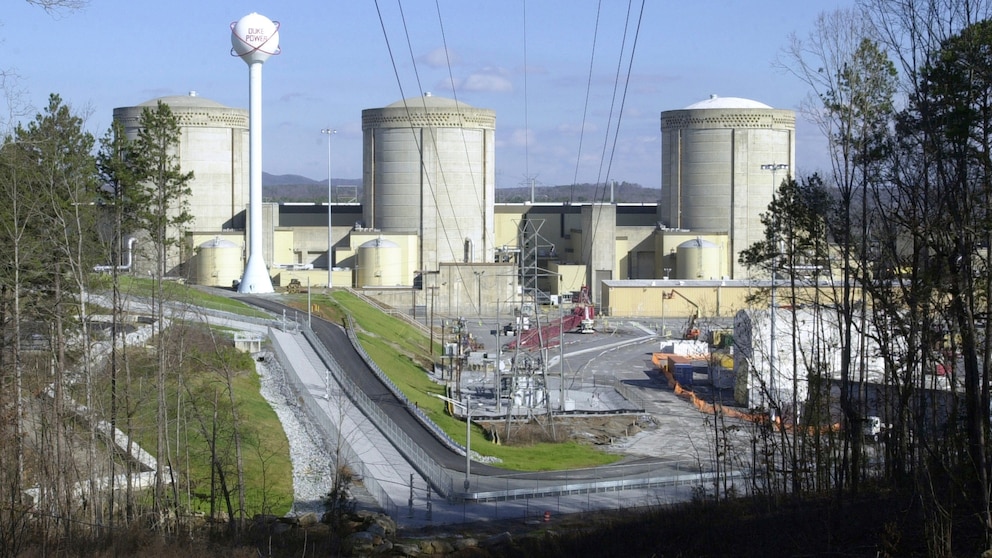
Police in South Carolina are investigating an incident involving a vehicle that drove through security fences at a nuclear power station on Thursday.

The Oconee County Sheriff’s Office said it is in the early stages of an investigation into an incident that occurred at the Oconee Nuclear Station around 8:05 p.m. on Thursday.

Police say that a "white male driving a silver 2002 Toyota Camry drove through the exit side of the gate on the Highway 183 side of the facility," according to information obtained by Deputies from the Uniform Patrol Bureau.

"After the vehicle struck the pop-up barricades that security at the plant activated, the driver backed the vehicle up and proceeded down a dirt road, where Duke Energy security blocked the vehicle in, according to Deputies. The driver then drove through a fence after attempting to hit the security officers," a press release from the Oconee County Sheriff’s Office read.

MORE: Former nurse now linked to 17 nursing home deaths

The driver then reportedly drove out of the exit of the plant where he attempted to hit a security truck with a guard in it, police said. 

The driver then made his way back onto Highway 183 before driving into Pickens County and pulled onto some property on Jones Mill Road where shots were subsequently fired.

At this time, the source of the shots fired in the Jones Mill Road area is unknown, police said.


The Oconee Nuclear Station, Jan. 8, 2005, in Seneca, S.C.
Mary Ann Chastain/AP
MORE: Man arrested for pointing gun at 6-year-old boy's head over Halloween goody bag

No one was injured and the nuclear station is "operating safely," Duke Energy said.

"Duke Energy has comprehensive security plans and a well-trained security workforce in place," the company said in a statement. "A vehicle entered an administrative gate, but was not able to access the plant due to our multiple layers of security."

The silver 2002 Toyota Camry has an Arkansas tag of 380VDR, according to information obtained during the investigation.

MORE: International manhunt on after woman found dead in airport garage as cops believe suspect fled to Kenya

"About one hour before tonight’s incident, the same vehicle and driver also showed up on the property of the Oconee Nuclear Station. After being asked to leave, the driver drove off," police said.

The FBI said it was aware of the incident, but deferred to the local sheriff's office for any information related to the case.

John Cohen, the former acting undersecretary for intelligence and analysis at the Department of Homeland Security, said the incident comes as the United States is on high alert because of tensions overseas.

"Over the last several months, there have been threats of violence directed at our nation's power infrastructure by foreign terrorist groups, domestic violent extremists," Cohen, now an ABC News contributor, said. "Investigators will want to determine whether this incident was motivated by extremist or terrorist ideology or whether some other grievance or factor was the inspiration behind the attack."

Anybody with any information on the whereabouts of the driver of a 2002 Toyota Camry with an Arkansas tag of 380VDR is asked to contact emergency authorities immediately.

The U.S. Nuclear Regulatory Commission, the body which oversees nuclear plants in the United States, told ABC News the incident was "monitored closely throughout the night," and said Duke Energy proactively informed the commission.

"The plant continues to operate safely, the public remains safe, and all U.S. nuclear power plants are operating at their normal security levels," a spokesperson said.

PEACH BOTTOM ATOMIC POWER STATION, UNITS 2 AND 3 – INTEGRATED INSPECTION REPORT 05000277/2023003 AND 05000278/2023003 AND EXERCISE OF ENFORCEMENT DISCRETION

PEACH BOTTOM ATOMIC POWER STATION, UNITS 2 AND 3 – INTEGRATED INSPECTION REPORT 05000277/2023003 AND 05000278/2023003 AND EXERCISE OF ENFORCEMENT DISCRETION

ADAMS ACCESSION NUMBER: ML23303A091

SUSQUEHANNA STEAM ELECTRIC STATION, UNITS 1 AND 2 – INTEGRATED INSPECTION REPORT 05000387/2023003 AND 05000388/2023003

SUSQUEHANNA STEAM ELECTRIC STATION, UNITS 1 AND 2 – INTEGRATED INSPECTION REPORT 05000387/2023003 AND 05000388/2023003

ADAMS ACCESSION NUMBER: ML23307A002

Thursday, November 2, 2023

NRC Announces Carrie M. Safford as the New Commission Secretary Inbox

Nuclear Regulatory Commission - News Release
No: 23-068 October 31, 2023
CONTACT: Office of Public Affairs, 301-415-8200

NRC Announces Carrie M. Safford as the New Commission Secretary

The U.S. Nuclear Regulatory Commission today announced the selection of Carrie M. Safford as the new Secretary of the Commission, effective Nov. 5. She is the fifth person in the 48-year history of the NRC to hold this position.

Safford has been serving as a Deputy Director in the Division Fuel Management, which has regulatory responsibility for nuclear fuel cycle activities in the Office of Nuclear Material Safety and Safeguards.

She succeeds Brooke Poole Clark, who assumed her new position as the agency’s General Counsel in mid-October.

In her new role, Safford will provide executive management services to support the Commission and implement Commission decisions. The Office of the Secretary serves a critical role with its responsibilities for scheduling Commission meetings, managing the Commission's decision-making process, codifying Commission decisions in memoranda, processing and controlling Commission correspondence, and maintaining the Commission’s historical records, among other duties.

“Carrie has served in a variety of capacities and brings extensive legal and regulatory experience,” said NRC Chair Christopher T. Hanson. “Her proven executive leadership and vast knowledge of the agency’s policies and procedures well positions her to keep the Commission’s business functioning smoothly.”

Safford joined the NRC in 2008 as an attorney, and later was selected as Deputy Assistant General Counsel in the Division of Materials Litigation and Enforcement within the Office of the General Counsel. She has served in leadership positions across the agency, including as Deputy Director of the Waste Confidence Directorate in NMSS; and as Assistant General Counsel in OGC in the Division of High-Level Waste, Fuel Cycle and Nuclear Security, and in the Division of Legislation, Ethics, and Administrative Law.

Before joining the NRC, Safford practiced energy law in Washington, D.C. She earned a Bachelor of Science in Biology-Geology from the University of Rochester and her Juris Doctor from Pace University School of Law. Safford is a graduate of the NRC’s Senior Executive Service Candidate Development Program.