'It was an accident' Holtec says after worker falls into reactor cavity at Palisades
|
'It was an accident' Holtec says after worker falls into reactor cavity at Palisades
|
Story by Jinjoo Lee • 3 min read
Sam Altman, CEO of OpenAI, has backed zero-revenue energy company Oklo.© Kyle Grillot/Bloomberg
Forget about the froth in tech valuations. The real excess might be building up in energy stocks.
For all the fears about stretched technology shares, many of those companies are hugely profitable ones that will keep chugging along even if the artificial-intelligence boom doesn’t have legs. Not so in the energy sector. A group of non-revenue-generating energy companies have collectively ballooned in value to more than $45 billion in hopes that tech companies will one day pay for their yet-to-be-built power.
The biggest of these is the OpenAI CEO Sam Altman-backed nuclear startup Oklo, whose shares have risen about eightfold year to date. The company now has a market cap of roughly $26 billion, making it the biggest U.S.-incorporated public company that generated no revenue in the past 12 months, according to data from S&P Global Market Intelligence.
Oklo is developing small modular nuclear reactors that use a non-water coolant—liquid metal sodium—and an enriched type of uranium fuel that is in limited supply. It doesn’t yet have a license from the U.S. Nuclear Regulatory Commission or binding contracts with power purchasers. Wall Street analysts don’t expect the company to generate substantial revenue until 2028.
Another zero-revenue company is Fermi, which was valued at roughly $19 billion upon its public debut earlier this month. Only two other no-revenue companies had larger market caps than Fermi on their first day of trading after an IPO, adjusted for inflation, according to Jay Ritter, finance professor at the University of Florida. These are EV-maker Rivian, which went public in 2021, and Corvis, an optical network equipment maker that went public during the dot-com bubble.
The company is backed by former energy secretary Rick Perry and helmed by Toby Neugebauer, the former chief executive of the failed anti-woke bank startup GloriFi. It has plans to build out 11 gigawatts worth of power for data centers, roughly the amount of capacity in New Mexico. Though its shares haven’t sustained their initial pop after listing, the company still commands a market capitalization of over $17 billion. That isn’t too far from the valuation of Talen Energy, a company that already owns an operating power fleet of about 11GW.
Fermi plans to meet that 11GW target using natural gas, nuclear, solar and battery power. It has a way to go: So far, it has secured natural-gas equipment that would cover just 5% of its total capacity goal. The company hasn’t lined up any binding customer contracts.
Companies developing even smaller “micro-modular” nuclear reactors are also commanding hefty market caps despite their lack of revenue. Shares of Nano Nuclear Energy, which made its debut on the public markets last year, have more than doubled so far this year. The company is valued at more than $2 billion. Terra Innovatum, which went public last week through a SPAC merger, is valued at over $1 billion.
Chain Reaction
Others swept up in the AI excitement generate revenue but aren’t expected to turn a profit for many years. Such companies include nuclear small modular reactors company NuScale Power, which earns some engineering and licensing fees for an SMR project in Romania. Its shares have surged 155% so far this year. Hydrogen fuel-cell company Plug Power’s shares, which had been in the gutter for many years, surged 90% this year to $4.8 billion on AI excitement. Neither company is expected to turn a profit until 2030, according to Wall Street analysts polled by FactSet.
One reason investors are piling into more speculative energy companies could be because profit-generating ones already command lofty multiples. Fuel-cell company Bloom Energy’s shares have rallied more than 400% year to date and are now valued at 133 times forward earnings. The company added about $5.4 billion in market cap on Monday after Brookfield Asset Management said it would invest up to $5 billion to deploy Bloom’s technology. Nuclear-fuel company Centrus Energy is valued at 99 times forward earnings.
Arguably, more commercial interest might be just what was needed to help expensive or unproven technologies take off. But based on the track record of zero or minimal revenue EV startups that went public in 2020, (remember Nikola, Fisker and Lordstown?), it is likely that many such companies will fizzle rather than pop.
If the AI bubble ever deflates, these energy companies with no revenue have the farthest to fall and little in the way of a cushion.
(Image credit: Jeff Fusco/ Getty Images)
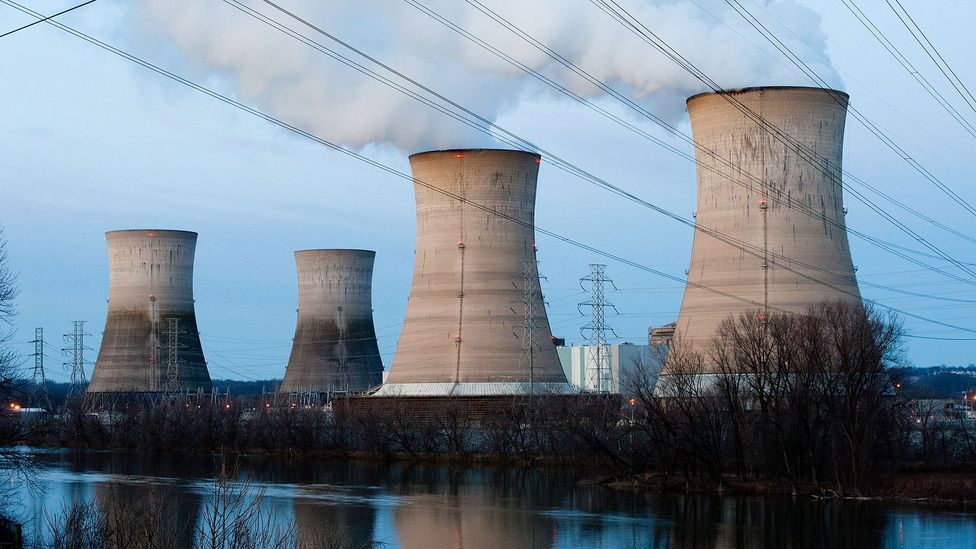
For many Americans, dropping "Three Mile Island" into conversation is like mentioning "Fukushima" or "Chernobyl" – places that have become synonymous with nuclear disaster, no explanation needed.
The actual history is more complicated.
In March 1979, one of two reactors at the Three Mile Island plant in central Pennsylvania partially melted down, in what is to this day the most serious nuclear accident in US history.
But it resulted in just a small fraction of the damage caused by those disasters in Japan and the Soviet Union. There were no fatalities and few if any long-term health effects (scientific studies have drawn slightly different conclusions on that point).
The whole thing would likely have been a much smaller news story had it not been for a film released only a few days before.
The China Syndrome was a thriller starring Jane Fonda as an intrepid reporter investigating safety problems at a nuclear plant. It was a work of fiction, not a documentary, but the parallels with Three Mile Island damaged the reputation of US nuclear power for years.
The plant was recently in the news again – not for an accident or a hit movie, but by a deal signed by tech giant Microsoft to buy energy from Three Mile Island’s remaining functioning reactor.
And it's just part of a larger trend. Silicon Valley is on the hunt for new sources of power to drive enormous data centres and in particular, the high-power chips that have become the backbone of the artificial intelligence (AI) industry.
Nuclear could help meet that challenge in two respects – it's a potential source of "always on" energy, and unlike fossil fuels, it's carbon-free.
Big tech is making a big bet on nuclear – Microsoft has even recently joined the industry's lobbying group, the World Nuclear Association.
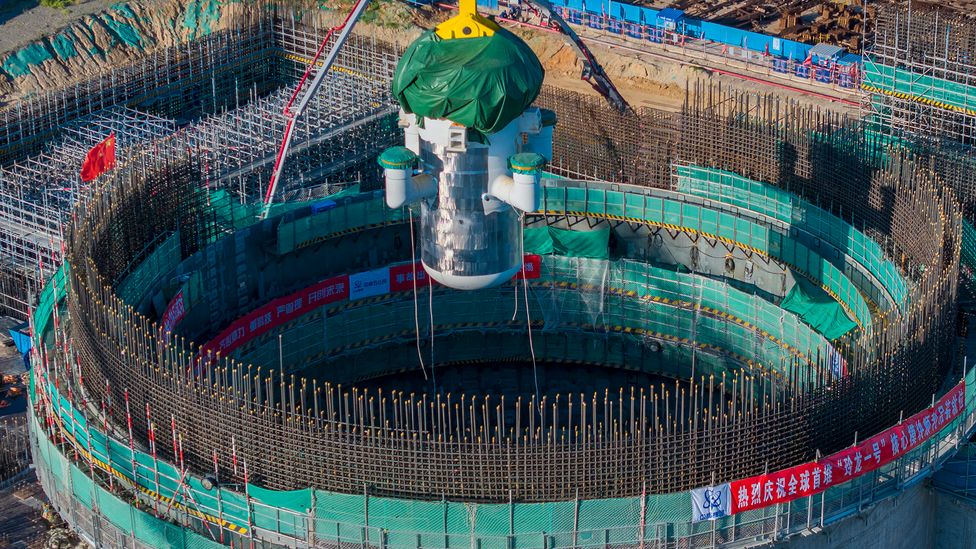
China has one operational small reactor. Others including Linglong are planned or under construction (Credit: Luo Yunfei/ China News Service/ VCG via Getty Images)
The maker of the Xbox is not alone. Google, Amazon and others are also funding nuclear projects, albeit taking a different tack with a newer technology known as small modular reactors (SMRs).
SMRs run at cooler temperatures, theoretically reducing the risk of a meltdown, and their smaller size also means lower construction costs.
Two such small reactors already provide a relatively small amount of power to electricity grids, one each in China and Russia's far east. So in some respects, SMRs sound like the perfect solution to the growing energy AI demand – if only it were that simple.
"Most SMRs are on paper" and haven't progressed beyond the testing stage, says Allison Macfarlane, the former chair of the US Nuclear Regulatory Commission and now a professor at the University of British Columbia in Canada.
Commercialising the technology will be difficult, Macfarlane says, because a smaller reactor core also means a less efficient reactor – producing less energy from the same amount of fuel. She estimates SMRs are years away from being financially viable.
"You just can’t get around economies of scale," she says. "These are fun ideas. But the tech bros don’t seem to be grounded in reality."
Undaunted, energy companies and tech giants are ploughing resources into research and pilots.

A tourist postcard celebrates the long history of the nuclear industry in Oak Ridge, Tennessee (Credit: Jim Heimann Collection/ Getty Images)
Kairos Power, Google's partner, is hoping to generate 50 megawatts of nuclear power by 2030 – equivalent to the amount of energy needed to power a small town.
The company has set up shop in Oak Ridge, Tennessee – another noteworthy American nuclear site, one that provided crucial support to the Manhattan Project which produced the first atomic bomb.
Kairos calls Oak Ridge a "proving ground" and in a statement to the BBC said that advanced construction techniques will increase efficiency and lower costs.
But even though the company aims to boost energy generation tenfold by 2035, practically it still won't help meet the supercharged energy demands of AI – which is ramping up right now.
"Small modular reactors can provide 24/7 clean energy near data centres," says Haider Raza, an expert in AI and energy use at the University of Essex. "But they won’t come close to solving the coming demand issue in the next year or two."
A report released in April by the International Energy Agency noted that the power demand from data centres, which currently account for around 1.5% of the world's electricity consumption, could double in the next five years. Beyond that, there's huge uncertainty – both in the amount of future demand and what sources might rise to meet it.
Nuclear reactors, Raza and other experts say, may have a role in meeting the AI energy crunch, but only years into the future – and only if the industry can convince an often-sceptical public.
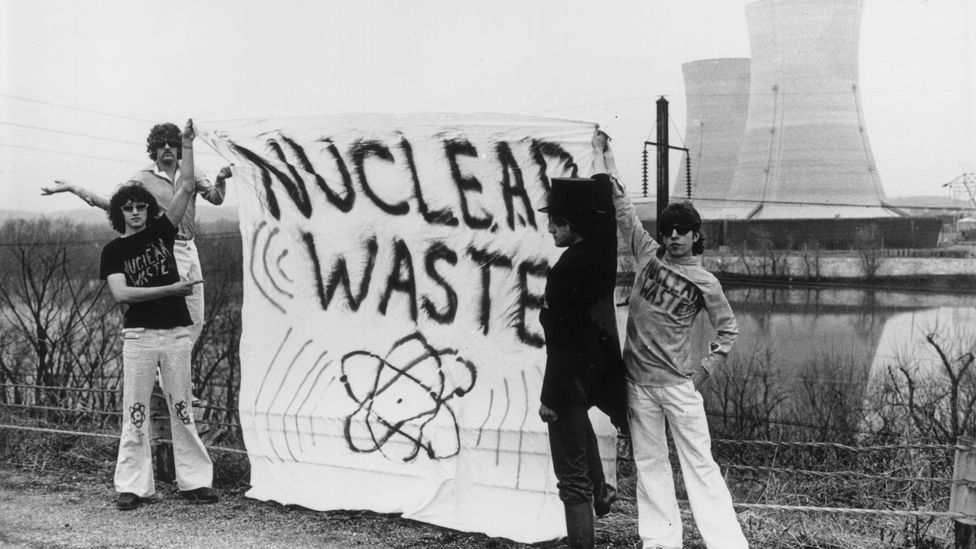
The Three Mile Island meltdown affected the reputation of nuclear energy in the US for decades (Credit: Keystone/ Hulton Archive/ Getty Images)
In March, the small suburb of North Tonawanda, halfway between Niagara Falls and the rust-belt city of Buffalo in Western New York state, took what to outsiders looked like a fairly drastic step – banning nuclear power generation within its borders.
The law was a direct reaction to anger over a proposal floated by a local tech company to build a small reactor for cryptocurrency mining. Deb Gondek, a local activist who prior to retirement had worked as director of sustainability for a food company based in the area, said that many residents were wary of the proposal because they'd already been upset by the noise of the crypto mining operation.
"The initial reaction was 'Oh brother, what are they cooking up now?'," she says. The council vote was unanimous in favour of a ban.
And then there's the issue of what to do with radioactive waste. Researchers at Stanford found that SMRs actually produce more such waste than larger conventional reactors, because more subatomic particles escape from a smaller nuclear core, contaminating surrounding materials.
However, in some places, the possible benefits balance out the risks. Kairos, the company that has partnered with Google, touts its local support in Tennessee, and a recent study by the nonpartisan Pew Research Center found that a slight majority of Americans are in favour of more nuclear energy.
At the same time, there are researchers working on other ways out of the upward demand spiral – ones that don't require a hunt for huge new sources of energy.
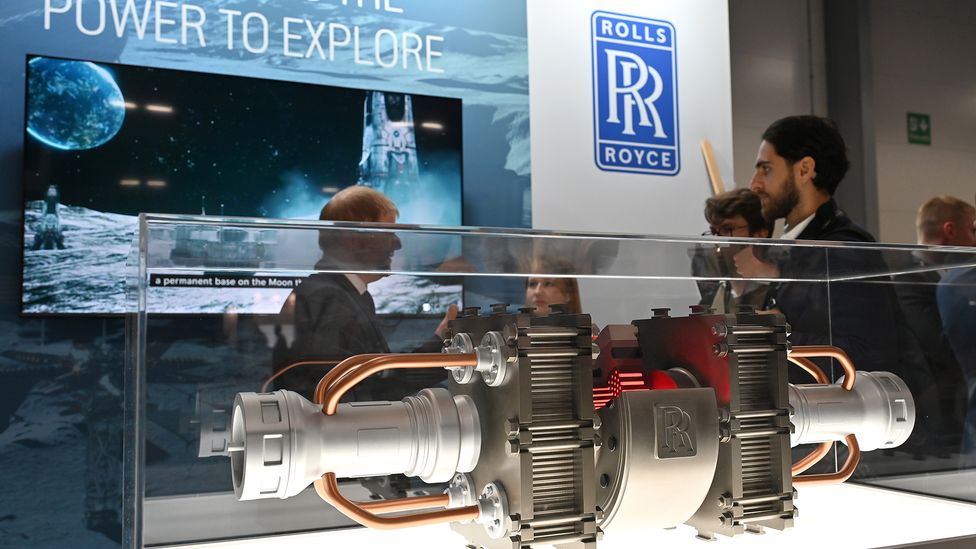
Small generators such as this one are receiving a lot of attention even though most have not yet reached the commercial stage (Credit: John Keeble/ Getty Images)
Mosharaf Chowdhury, an associate professor at the University of Michigan notes that AI is growing much faster than previous energy-intensive technologies. Automobiles and computers, for instance, took decades to achieve mass adoption.
"AI has got to saturation point in not even 15 months," he says. "It just grew so fast, we didn't have a second to imagine how to account for it."
Chowdhury and his colleagues are looking at the ways that chips can be configured to suck up less power, or use AI models that rely on smaller or more focused databases of information.
Unfortunately, Chowdhury says, so far "there is no good solution where we have managed to find models that are significantly smaller and run significantly faster but accuracy-wise are just as good."
Still, he insists: "Whatever else is going on, what we should continue to do is more research on how to make energy-optimal AI."
And many businesses are taking a hard look at how they use AI applications and whether they can actually afford them.
"There's no way around the economics," says Haider Raza from the University of Essex, who consults with businesses about their AI use. "When the demand is high, and the supply is low, the only option is to increase the price (of energy), and somebody has to pay for it."
Raza says some of his customers have decided to hold off on AI for the time being – and notes that nuclear will be only one of many sources powering the future of technology.
And for all their big bets on splitting the atom, the tech giants agree. In a recent policy brief, Microsoft noted: "There is no one technology or solution that will meet the vast electricity and decarbonization needs of the markets, societies, and communities across the globe."
by Johan Sheridan - 10/14/25 4:08 PM ET
ALBANY, N.Y. (NEXSTAR) — A federal judge in New York last month struck down the state’s Save the Hudson Act, a law that aimed to prevent Holtec International, the owner of the decommissioned Indian Point nuclear plant, from dumping over a million gallons of radioactive wastewater into the Hudson River.
Still, despite the ruling and her openness to expand nuclear power in the state, Gov. Kathy Hochul (D) maintains that the site will not reopen.
“Let me say this plainly: No,” Hochul wrote in a letter to Westchester County Executive Ken Jenkins on Friday, which can be read at the bottom of this story.
Entergy, the previous owners of the Indian Point Energy Center, shut down its final reactor, Unit 3, in April 2021. Holtec bought the three-unit nuclear power plant located in the northwestern corner of Westchester County on the eastern bank of the Hudson River in May 2021.
The plant is undergoing a decommissioning process that includes removing equipment and structures, reducing residual radioactivity, and dismantling the facility. Holtec projects that process to finish by 2033.
The U.S. District Court for the Southern District of New York sided with Holtec in a lawsuit they filed in April 2024, agreeing that state law can’t block the discharge of radioactive wastewater from nuclear sites being decommissioned. The court found that only the federal government has that authority, because federal law like the Atomic Energy Act overrules the state under the Supremacy Clause of the U.S. Constitution.
The judge determined that S6893/A7208 wasn’t meant to protect the radiological safety of the public or the environment, which falls under federal jurisdiction. Gov. Kathy Hochul and Attorney General Letitia James announced their intent to appeal the decision, arguing that the law represents vital protections for the iconic river and the economic health of the region through tourism and real estate values.
Jenkins applauded the decision to appeal, saying, “The Hudson River is the lifeblood of our region—a source of recreation, natural beauty, and economic vitality—and we must do everything in our power to protect it.” And in the letter to Jenkins, Hochul directly addressed the concern that the state government may plan to reopen Indian Point or build small modular reactors on the site.
Radiant Nuclear announced Monday afternoon that it will build its first nuclear microreactor manufacturing facility in Tennessee, abandoning plans for the controversial project near Bar Nunn, after months of heated debate over spent nuclear fuel storage.
 David Madison | October 14, 2025 | 6 min read

After months of debate and amid regulatory uncertainty in Wyoming, Radiant Nuclear announced Monday that it’s ditching its controversial plan to build nuclear microreactors and store spent fuel in Natrona County. (CSD File)
Editor's note: This story has been updated to add more reaction to Monday's announcement by Radiant Nuclear.
Radiant Nuclear announced Monday afternoon that it will build its first nuclear microreactor manufacturing facility in Oak Ridge, Tennessee, abandoning plans for a controversial project near Bar Nunn, after months of heated debate over spent nuclear fuel storage.
The decision comes after Radiant repeatedly warned Wyoming officials that regulatory uncertainty could drive the company elsewhere.
Radiant announced Monday it will build a factory on portions of the historic K-27 and K-29 Manhattan Project sites, with construction beginning in early 2026. The company plans to deliver its first mass-produced semitrailer-sized Kaleidos microreactor by 2028 and scale up to producing 50 reactors annually within a few years.
"We choose Oak Ridge, Tennessee, because of their strong workforce, the community's rich nuclear heritage and the public's second-to-none nuclear IQ," said Tori Shivanandan, Radiant's chief operating officer. "Just as importantly, the state's business-friendly environment gave us the immediate regulatory certainty we needed to move fast."
State Sen. Ed Cooper, R-Ten Sleep, told Cowboy State Daily that members of the Wyoming Freedom Caucus need to answer for their role in driving away the project.
"This is disappointing for Wyoming's economic future," Cooper said, adding that vocal opposition from certain legislators erased years of economic development work aimed at bringing high-paying manufacturing jobs to the state.
Rachel Rodriguez-Williams, chairman of the Wyoming Freedom Caucus, responded to Cooper's charge and told Cowboy State Daily the Freedom Caucus "draws the line at out-of-state waste storage."
She said the group is standing up to California billionaires who "insist on saddling our landscapes with their windmills, their solar panels and now their radioactive waste."
Ray Wert, Radiant's vice president of communications and marketing, said the contrast between Wyoming and Tennessee is stark.
The company faced "zero opposition" in Tennessee, he said, while in Wyoming it was criticized by a few loud voices of opposition in Bar Nunn and among a group of legislators.
"Oak Ridge's nuclear IQ is absolutely second to none," Wert said. "They were the first community in the United States to enrich uranium. They're not afraid of it. They understand it."
Bar Nunn Mayor Peter Boyer said he doesn't expect another opportunity like this to appear on the horizon.
"I don't see any other $200 or $300 million companies banging down the door to come here to Bar Nunn," Boyer said. "I think a lot of businesses would be really reluctant to come to Bar Nunn after seeing what happened with Radiant."
Boyer said the whole debate raises big questions about state legislators using their influence over local issues, saying legislators were "way out of line" in interfering with local politics.
Justin Farley, CEO of Advance Casper, said it now remains unclear how Wyoming will participate in the current "nuclear Renaissance."
"I mean, it's happening," said Farley, who worried about other nuclear tech companies like BWXT in Gillette, which "is already getting heat from that same group," he said, referring to the Wyoming Freedom Caucus.
The decision by Radiant to drop Wyoming as a potential manufacturing site comes after months of consideration, company officials say.
"We are absolutely looking at our second and third choices,” said Radiant's Wert in a June interview with Cowboy State Daily. "We're hopeful that Wyoming is going to be the right location for us. But it's all dependent on whether or not the state is interested in having us.”
In a letter to the editor sent to Cowboy State Daily on Monday, Radiant Senior Director of Operations Matt Wilson explained the company had spent months in "open dialogue" with Wyoming officials about building the factory in Natrona County near Bar Nunn.
"Recent commercial wins, our growing work with the U.S. military, and the speed at which Radiant is moving towards successfully turning on our first reactor next year, all demanded a turnkey location where we could be quickly up and running to meet customer demand," Wilson said. "Given that, this week we had to make a very tough decision to site our first factory in Oak Ridge, Tennessee, instead of Wyoming."
Wilson said the decision ultimately came down to regulatory certainty.
Wyoming law currently allows spent fuel storage only at operating reactor sites, not at manufacturing facilities.
Radiant's business model requires returning reactors back from deployment for refueling and temporarily storing used fuel in above-ground containers at its factory.
"Radiant was only seeking to safely and temporarily store used fuel from Wyoming-built reactors returned from deployment," Wilson said. "Sadly, Wyoming's law currently does not accommodate that model."
The company conducted community polling and door-to-door conversations that it says showed Natrona County was supportive of the investment, Wilson said. But legislative opposition proved insurmountable.
Video: Radiant Nuclear Picks Tennessee Over Wyoming To Build Nuclear Microreactor Facility
The project faced intense criticism from Bar Nunn residents and key legislators throughout 2025.
Rep. Bill Allemand, R-Midwest, delivered a scathing critique of the project at a Natrona County Commission meeting in June, telling commissioners that residents "overwhelmingly oppose it."
"The people of Bar Nunn do not want this in their backyard," Allemand told Cowboy State Daily in June. "I really like nuclear energy, but my constituents do not want it stored in their backyard. And I will do as my constituents say."
Allemand argued there was "no benefit for the state of Wyoming, for Natrona County or for Bar Nunn" and predicted the project would face an "uphill battle in the Legislature."
Mayor Boyer had supported the project, telling Cowboy State Daily he believed it would benefit the community despite acknowledging opposition.
"I think it would be a good thing for the town. I do," Boyer said in a July interview. "There are some who are for, there are some who are against, and some, they don't even know. It's kind of a lot of different camps here. I think overall it'll be a good thing for the community."
The project would have started with around 70 jobs and ramped up to more than 200 at full production, according to company officials. Natrona County commissioners had approved Radiant's application for a $25 million state grant for infrastructure despite some public opposition at hearings.
David Madison can be reached at david@cowboystatedaily.com.
New paper from the Harvard Electricity Law Initiative uncovers how utilities are forcing ratepayers to fund discounted rates for data centers

Holtec International in Camden, N.J. May 10, 2019. JOE LAMBERTI/COURIER POST-USA TODAY NETWORK
Adrian Hedden
Carlsbad Current-Argus
achedden@currentargus.com
Local officials in southeast New Mexico are searching for a new path to see a nuclear facility built and operated near the border between Eddy and Lea counties, after a company planning to do so terminated the project.
In canceling its plans, New Jersey-based Holtec International pointed to a tide of opposition from state officials – despite local support in Carlsbad and Hobbs – to its proposal to store spent nuclear fuel rods brought in from power plants around the country.
Holtec first applied for a federal license for the facility in 2017, touching off a controversial licensing process that was delayed by litigation and plagued by opposition from the state administration, New Mexico’s congressional delegation and environmental advocates.
The company was recruited to the location by the Eddy Lea Energy Alliance, a consortium of local officials from the two counties and the cities of Carlsbad and Hobbs. The Alliance owns the 1,000-acre plot of land where the facility would have operated.
Company officials wrote in a July 28 letter to the Alliance that the project “was impossible” amid strong opposition from state lawmakers and current agreements in place with local leaders, stating the company was terminating an agreement to buy the land from the Alliance once the facility was operational.
Holtec spokesperson Patrick O’Brien confirmed Wednesday, Oct. 8, that the company and the Alliance agreed to part ways, allowing the Alliance to seek other companies to develop the site and Holtec to pursue projects in other states amid recent efforts by the U.S. Department of Energy to facilitate state consent.
“After discussions with our longtime partner in the HI-STORE project, the Eddy-Lea Energy Alliance, and due to the untenable path forward for used fuel storage in New Mexico, we mutually agreed upon canceling the agreement,” O’Brien wrote in an email.
“This allows for (the Alliance) to work to redevelop the property in a manner that fits their needs and allows Holtec to work with other states who are amenable to used fuel storage based on the recent DOE work on public education and outreach.”
During a Wednesday, Oct. 8, meeting of the Alliance held in a Carlsbad, Chair John Heaton said the Alliance offered to dissolve a noncompete clause, which would allow Holtec to pursue other projects in Colorado and Utah, while continuing to pursue the site in New Mexico.
He said the company’s president, Krishna Singh, responded that he “would not put another penny” into New Mexico after heavy state opposition was voiced and the project delayed.
The Alliance’s board voted unanimously to accept the letter and termination of the project.
“He is just so frustrated with the constant roadblocks from the state of New Mexico,” Heaton said of Singh. “They just said they’re through. They want to cancel it.”
The company appeared ready to build the facility which would hold up to 100,000 metric tons of the refuse after a U.S. Supreme Court verdict in June reinstated a federal license to build and operate the site.
Justices ruled the project’s opponents who initially challenged the license for the site had no legal standing to enter the licensing process in the first place.
That left Holtec and its supporters claiming victory and expecting the project to move forward, after more than a decade of debate, public hearings, and negotiations between the company and the Alliance.
But Senate Bill 53, passed by state lawmakers in 2023 barred any state agency from issuing permits Holtec would need to operate the site, a problem noted in Holtec’s letter along with the overall “political climate” in New Mexico.
“Unfortunately, the passage of state legislation that effectively prohibits the construction of the (consolidated interim storage facility), combined with the continued public opposition expressed by New Mexico’s current administration, has made the project impossible in the near future,” read the letter signed by William F. Gill, Holtec vice president and senior counsel.
During the Wednesday meeting, Heaton made a motion for the Alliance to accept the July 28 letter from Holtec canceling the land sale and a revenue sharing agreement. The motion was supported by a unanimous vote.
Heaton said the site could still be used for a nuclear project developed by a different company to either store or repurpose the spent fuel, but that such a move would require a new license application process.
“Any other entity that would want to create an interim storage facility at the site would need to go through the (Nuclear Regulatory Commission). It (the license) is not assignable,” Heaton said.
Hobbs Mayor Sam Cobb said that if Holtec officially terminates its role in the project, the Alliance must seek another company to build and bring the facility into service.
He argued that the commission, the U.S. government’s main approval arm for nuclear facilities, already approved the project federally, meaning it could be viable with another willing participant.
“I think it’s incumbent on us to explain any possible forward movement at the site which the (Nuclear Regulatory Commission) has deemed suitable,” he said. “The nuclear industry is resurging and it’s going to keep expanding.”
But Heaton countered that the project as approved involved “proprietary” technology owned by Holtec, meaning a new company would need to pay Holtec for its use or seek approval for a new design.
He said Holtec has built but not operated storage facilities in other areas and could be open to doing so for a new operator of the facility with new federal approval.
“They will still have to go through the process,” Heaton said. “That is the big barrier.”
He did say Wisconsin-based Shine Technologies might be ideal for a different project at the site in lieu of Holtec’s participation.
In February, Shine Technologies announced it was selected by the U.S. Department of Energy to receive funding through its Advanced Research Projects Agency-Energy program to aid in developing technology to reprocess spent nuclear fuel.
That could involve the Alliance’s site, Heaton said. He said the fuel rods initially planned to be stored at Holtec’s facility could instead be reprocessed at the location, potentially by Shine Technologies or a similar company.
“Reprocessing has much more economic benefit than storage,” Cobb said. “We probably need to put together a plan to make those presentations.”
Mario Tama/Getty Images
New York Attorney General Letitia James will appeal a court ruling allowing the owners of the shuttered Indian Point nuclear facility to resume dumping radioactive wastewater into the Hudson River.
Manhattan federal Judge Kenneth Karas struck down a state law last month that would prevent Holtec, the plant’s owners, from discharging waste water into the river.
Holtec filed a lawsuit shortly after the Save the Hudson law was passed in 2023. The judge ruled that New York overstepped its authority by preventing Holtec from releasing radioactive waste from Indian Point, which the facility has been doing lawfully for decades. The ruling stated that only the federal government has the authority to regulate nuclear discharges.
But states have significant authority over water discharge and pollution, and James said in a statement that the federal court decision was misguided.
“We must ensure that the Hudson River and its surrounding communities are protected for future generations,” James said. “Indian Point must be decommissioned responsibly, and my office will be appealing this decision to defend New Yorkers and our natural resources.”
The wastewater released by the former plant contains tritium, which the Nuclear Regulatory Commission says is a mildly radioactive type of hydrogen. Tritiated water is chemically indistinguishable from normal water and cannot be filtered.
Humans are exposed to tritium through air and water. The releases from Indian Point are within federal standards, but nuclear experts have expressed uncertainty about what a safe level of exposure is and whether exposure has been studied enough. Gothamist previously reported that when tritium chemically embeds into organic matter, such as plants and animals in the food chain, its radiation dose can intensify tenfold.
“Holtec’s plan to release millions of gallons of tritiated wastewater into the Hudson River will depress interest in tourism and recreation in the Hudson Valley,” Tracy Brown, president of the environmental advocacy group Riverkeeper, wrote in a statement. The organization focuses on protecting the Hudson River. “After how far we have come in remediating both the Hudson and people’s relationship with it, this is the last thing our communities need.”
Theoretically, Holtec can resume with its plan to release 45,000 gallons of tritiated water, which is the cheapest viable option for disposing of the waste. The company has not released a date for the discharge but expressed support for the judge’s decision.
“We are pleased with recent federal court ruling, as it has always been our contention that radiological water discharge falls under the purview of the federal government and the [federal Nuclear Regulatory Commission], we will continue to decommission the Indian Point site in an environmentally responsible manner working with local, state and federal stakeholders,” Patrick O’Brien, Holtec’s director of government affairs and communications, wrote via email.
Holtec said it doesn't plan to release the waste until the legal fight has concluded.
Westchester County Executive Ken Jenkins asked the commission “to direct Holtec to stop this reckless action, and to protect the health and safety of our communities. The fight to safeguard the Hudson River is far from over.”
Gov. Kathy Hochul’s office did not immediately respond to a request for comment.
A business case for continued investment in solar and adaptation to stay competitive. A recent Ember study on 24/7 solar, at the 97% benchmark towards full solar supply supported by battery storage forum, the LCOE is $104/MWh – 22% below last year’s global average and cheaper than coal ($118/MWh) or nuclear ($182/MWh), which in itself is a reason strong enough to continue the investment in solar. Mike Drop! 🎤🫲🏻 the numbers alone tell the story
Story by Justin Rowlatt - Climate Editor • 4 min read
Renewable energy including nuclear power jointly overtook coal as the world's leading source of electricity in the first half of this year - a historic first, according to new data from the global energy think tank Ember.
Electricity demand is growing around the world but the growth in solar and wind was so strong it met 100% of the extra electricity demand, even helping drive a slight decline in coal and gas use.
However, Ember says the headlines mask a mixed global picture.
Developing countries, especially China, led the clean energy charge but richer nations including the US and EU relied more than before on planet-warming fossil fuels for electricity generation.
Coal, a major contributor to global warming, was still the world's largest individual source of energy generation in 2024, a position it has held for more than 50 years, according to the International Energy Agency.
China remains way ahead in clean energy growth, adding more solar and wind capacity than the rest of the world combined. This enabled the growth in renewable generation in China to outpace rising electricity demand and helped reduce its fossil fuel generation by 2%.
India experienced slower electricity demand growth and also added significant new solar and wind capacity, meaning it too cut back on coal and gas.

In contrast, developed nations like the US, and also the EU, saw the opposite trend.
In the US, electricity demand grew faster than clean energy output, increasing reliance on fossil fuels, while in the EU, months of weak wind and hydropower performance led to a rise in coal and gas generation.
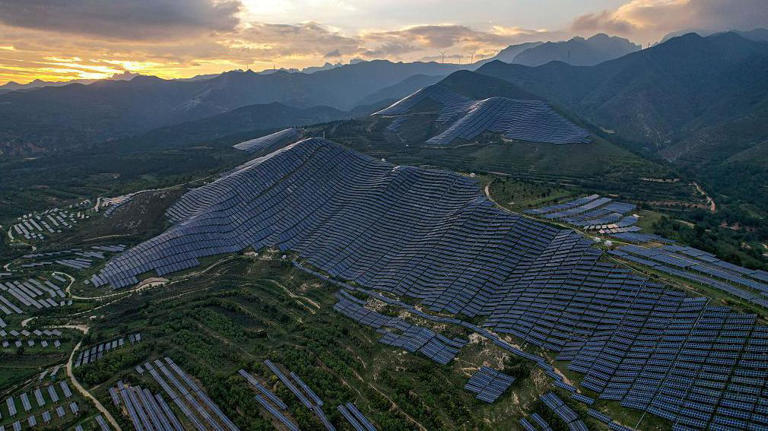
Despite these regional differences, Ember calls this moment a "crucial turning point".
Ember senior analyst Malgorzata Wiatros-Motyka said it "marks the beginning of a shift where clean power is keeping pace with demand growth".
Solar power delivered the lion's share of growth, meeting 83% of the increase in electricity demand. It has now been the largest source of new electricity globally for three years in a row.
Most solar generation (58%) is now in lower-income countries, many of which have seen explosive growth in recent years.
That's thanks to spectacular reductions in cost. Solar has seen prices fall a staggering 99.9% since 1975 and is now so cheap that large markets for solar can emerge in a country in the space of a single year, especially where grid electricity is expensive and unreliable, says Ember.
Pakistan, for example, imported solar panels capable of generating 17 gigawatts (GW) of solar power in 2024, double the previous year and the equivalent of roughly a third of the country's current electricity generation capacity.
Africa is also experiencing a solar boom with panel imports up 60% year on year, in the year to June. Coal-heavy South Africa led the way, while Nigeria overtook Egypt into second place with 1.7GW of solar generating capacity - that's enough to meet the electricity demand of roughly 1.8m homes in Europe.
Some smaller African nations have seen even more rapid growth with Algeria increasing imports 33-fold, Zambia eightfold and Botswana sevenfold.
In some countries the growth of solar has been so rapid it is creating unexpected challenges.
In Afghanistan, widespread use of solar-powered water pumps is lowering the water table, threatening long-term access to groundwater. A study by Dr David Mansfield and satellite data firm Alcis warns that some regions could run dry within five to ten years, endangering millions of livelihoods.
Adair Turner, chair of the UK's Energy Transitions Commission, says countries in the global "sun belt" and "wind belt" face very different energy challenges.
Sun belt nations - including much of Asia, Africa, and Latin America - need large amounts of electricity for daytime air conditioning. These countries can significantly reduce energy costs almost immediately by adopting solar-based systems, supported by increasingly affordable batteries that store energy from day to night.
Wind belt countries like the UK face tougher obstacles, however. Wind turbine costs have not come down by anything like as much as solar panels - down just a third or so in the last decade. Higher interest rates have also added to borrowing costs and raised the overall price of installing wind farms significantly in the last few years.
Balancing supply is harder too: winter wind lulls can last for weeks, requiring backup power sources that batteries alone can't provide - making the system more expensive to build and run.
But wherever you are in the world, China's overwhelming dominance in clean tech industries remains unchallenged, other new data from Ember shows.
In August 2025, its clean tech exports hit a record $20bn, driven by surging sales of electric vehicles (up 26%) and batteries (up 23%). Together, China's electric vehicles and batteries are now worth more than twice the value of its solar panel exports.
A Risky Situation' — the Critical State of Ukraine's Zaporizhzhia Nuclear Power Plant, Explained
The Zaporizhzhia Nuclear Power Plant (ZNPP) remains disconnected from the Ukrainian electricity grid and without external power for the 10th consecutive day, creating an increasingly "risky" situation, experts told the Kyiv Independent.
Russian President Vladimir Putin referenced the crisis at the ZNPP, which is under Russian control, in his Oct. 2 remarks at the Valdai International Discussion Club, again blaming Ukraine for the outage, despite evidence to the contrary, and threatening retaliatory strikes on Ukrainian nuclear power plants.
Beyond the escalating rhetoric, experts indicate that the danger at the plant, the largest nuclear power station in Europe, is real.
Ukraine’s state nuclear operator Energoatom warned that the diesel generators powering the plant are designed only for short-term emergency use and are not meant to sustain the plant’s operational needs for an extended period. A shutdown of these generators could result in a loss of control over the facility’s nuclear safety systems.
President Volodymyr Zelensky described the situation at the Zaporizhzhia plant as "critical" on Sept. 30. Diesel generators are now supplying power to the plant, but one has already failed, he said.
Najmedin Meshkati, a professor of civil/environmental engineering, industrial and systems engineering and international relations at the University of Southern California, also confirmed that diesel generators "are not designed to be run in such a sustained period of time."
"It’s a risky situation because emergency generators are big machines, and they could easily break down. They are reliable, but at the same time, (require) a high-maintenance type of machinery due to their wear and tear," Meshkati said.
"I would not be surprised if some of them break down after this length of period of being in operation," he added.
Ukraine’s Energy Ministry told the Kyiv Independent that the situation is further complicated by Russia’s failure to carry out scheduled repairs and maintenance, which increases the risk of diesel generator failure and threatens a shutdown of the nuclear fuel cooling system and failure of critical safety systems. This could lead to a nuclear or radiation accident.
"The potential consequences of the failure of safety systems at the ZNPP will be transboundary and pose a danger not only to Ukraine but also to many European countries," a spokesperson said.
"No nuclear power plant in the world has ever been in the same situation as the ZNPP, and it is impossible to predict anything," the spokesperson added.
The ZNPP has been under Russian occupation since March 2022. The six reactors were shut down a month after Moscow’s occupation, but the facility still requires electricity to maintain cooling and prevent a nuclear incident.
Russian troops reportedly struck a power line on Sept. 23, severing the plant’s connection to Ukraine’s electrical grid. This marks the 10th and longest blackout at the plant since Russia’s full-scale invasion began in 2022.
While Russian state media blame Ukraine for the strike, Greenpeace Ukraine published an investigation on Oct. 1, saying that there is no evidence of any military strikes around the pylons and power line network at the ZNPP. Greenpeace nuclear expert Jan Vande Putte told the Kyiv Independent that Russia can repair the line "in a matter of hours."
"But they don't do that. They created the crisis, and they want to manage it as a political strategy. It's a very precise sabotage," Vande Putte said.
President Volodymyr Zelensky expressed a similar sentiment, writing in an Oct. 1 social post that "Russia is deliberately creating the threat of radiation incidents, taking advantage, unfortunately, of the weak position of the IAEA and its director, Rafael Grossi, as well as the distraction of global attention."
Zelensky's statements came after a Russian attack on an energy facility in the town of Slavutych in Kyiv Oblast, which caused a several-hour blackout at the Chornobyl Nuclear Power Plant on Oct. 1.
While ZNPP "is not going to blow up tomorrow," the situation is serious in a long-term perspective, Vande Putte said.
"They (Russians) can let the crisis get worse. (...) They can move closer and closer to that point over the coming week, and to have that kind of nuclear blackmail. That's their strategy," he added.
Dmytro Orlov, Energodar mayor, who lives in Ukraine-controlled territory, told the Kyiv Independent that at the start of the Russian occupation, the power plant remained fully operational.
"But they pressured the staff to the point that there was almost no one left to work there," he said. "All the equipment was shut down, is not being repaired, and is deteriorating. And the station has been turned into a military base."
"The nuclear power plant is no longer used as an energy facility, but is used exclusively for military purposes, and the goal is clear — international pressure. The occupiers are doing this (provocations) to use nuclear blackmail against the whole world," Orlov added.
An investigation by the Truth Hounds and Greenpeace Ukraine published on Sept. 24 detailed Rosatom's role in pressuring plant staff, including torture, "including beatings, electrocution, sexual violence, mock executions, and threats to family members of detainees." Rosatom, the Russian nuclear giant, became ZNPP’s operator after the occupation.
The report indicated that 78 staff members were unlawfully detained, while six were "tortured to death."
Meshkati suggests that Russia’s actions at the power plant could be a negotiating tactic.
"Nuclear plants are too important to be used as a bargaining chip or for political horse-trading or power plays. They are really too dangerous. If something goes wrong, everybody, the friend and foe, will be hurt equally," Meshkati said.
Foreign Minister Andrii Sybiha said on Oct. 2 that Russia deliberately cut power to the Zaporizhzhia nuclear power plant as it's preparing to reconnect the facility to its own energy system.
Greenpeace Ukraine published a report on Sept. 27 that used satellite imagery and Rosatom’s reports indicating that Russia wants to restart one of the reactors, and reconnect the grid to the occupied territories and eventually to the Kremlin.
Vande Putte also suggests that Russia’s motivation is based "not so much for electricity reasons, but for military and political reasons."
It's the way for them to say clearly "this is Russian territory, it's our nuclear power plant," Vande Putte said.
In a statement issued by the International Atomic Energy Agency (IAEA), chief Rafael Grossi said that the U.N. agency is "in constant contact with the two sides with the aim to enable the plant’s swift re-connection to the electricity grid."
The EU has called on Russia to "immediately cease all military operations around the nuclear plant" and enable the repairs. In a Sept. 30 statement, the bloc's diplomatic service denounced Russian occupation of the plant as illegal and urged Moscow to withdraw its forces.
The Zaporizhzhia plant has faced repeated safety concerns since Russia’s invasion, including power outages, nearby shelling and staffing shortages. A monitoring mission from the International Atomic Energy Agency (IAEA) has been stationed at the ZNPP since September 2022, but Russian authorities have frequently restricted its access.